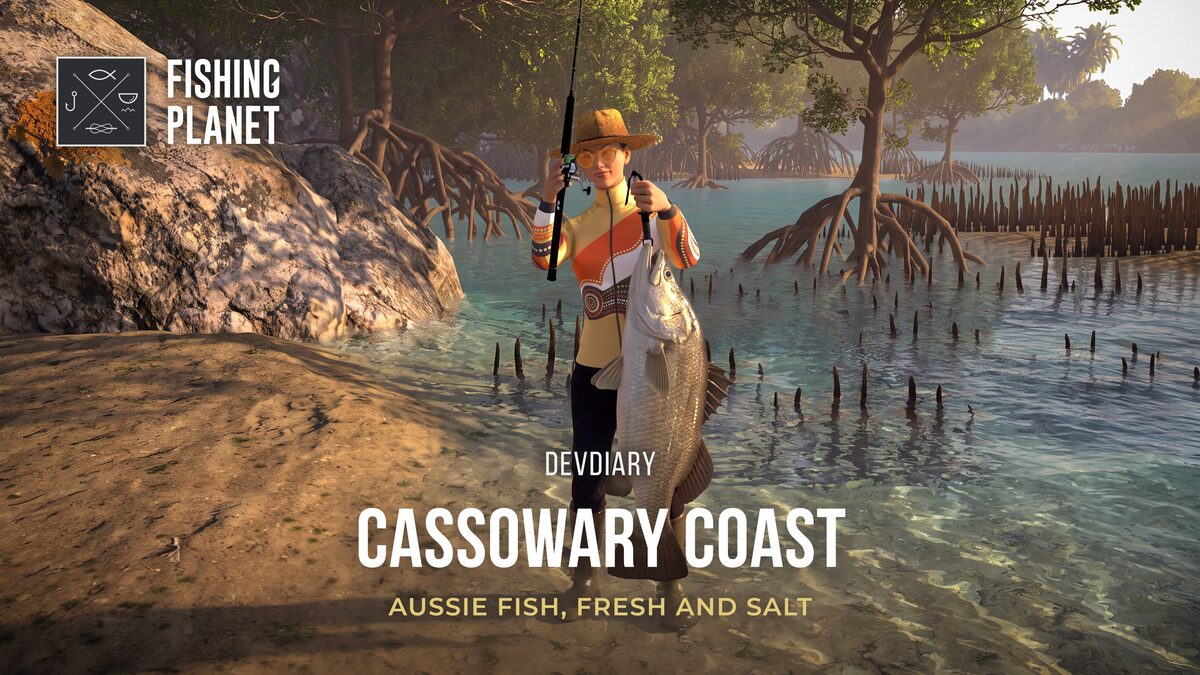
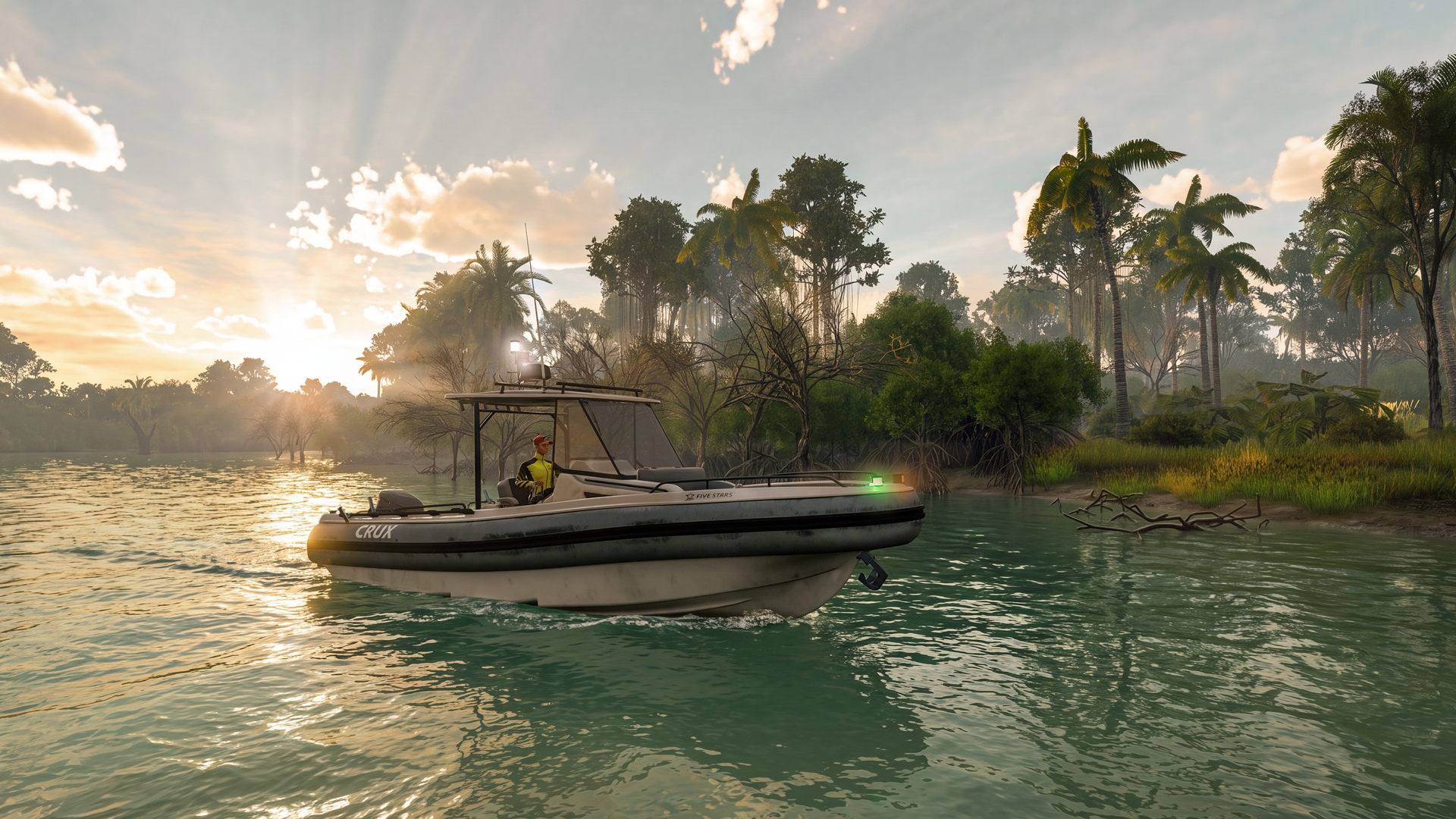
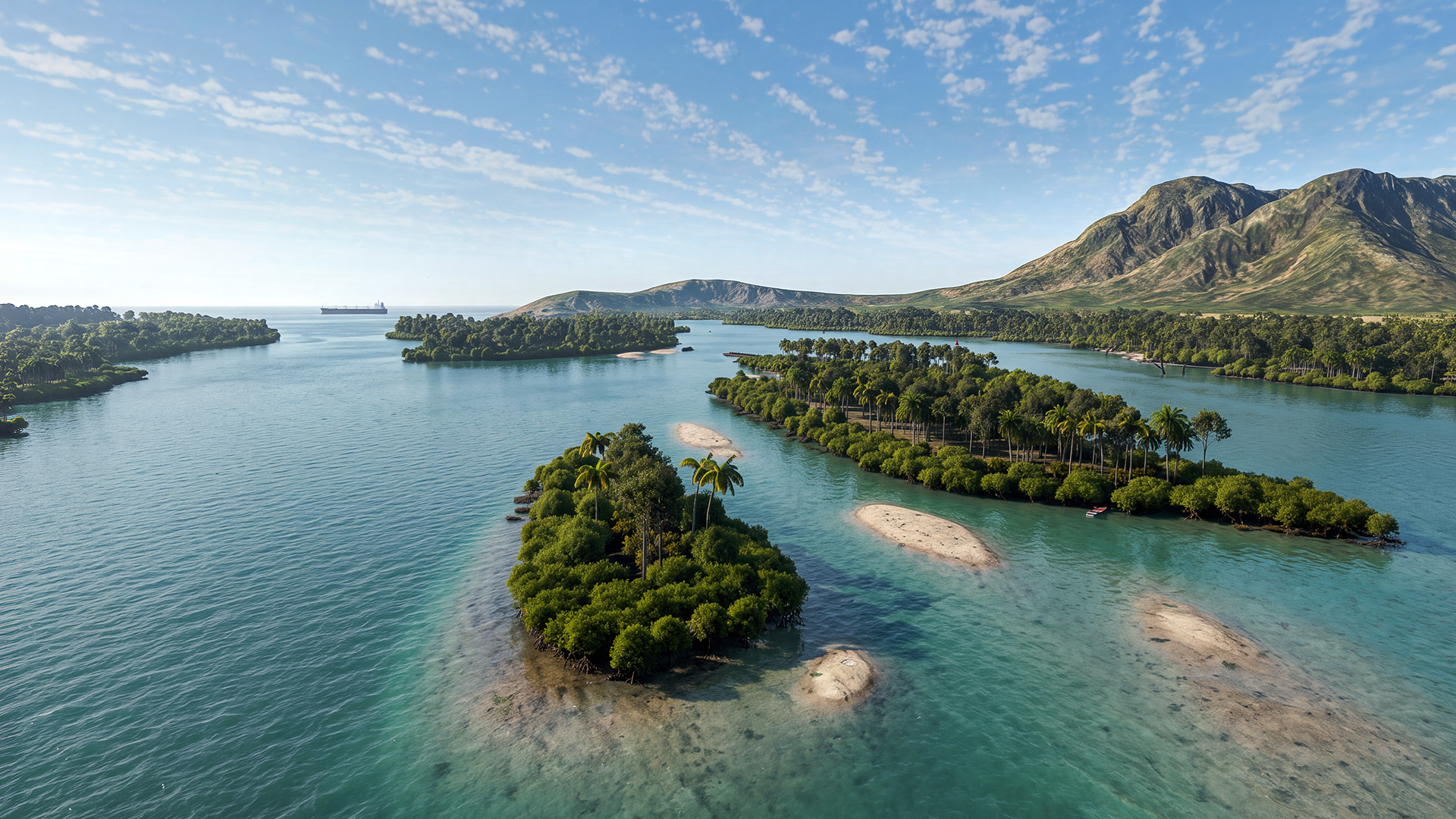
Last week, we took you on a first look at our upcoming waterway, Cassowary Coast, Australia, where freshwater rivers meet the sea in a saltwater estuary.
As we mentioned in our first DevDiary, Cassowary Coast brings together two fishing areas. You’ll unlock the River Area at level 44 and the Estuary Area at level 78.
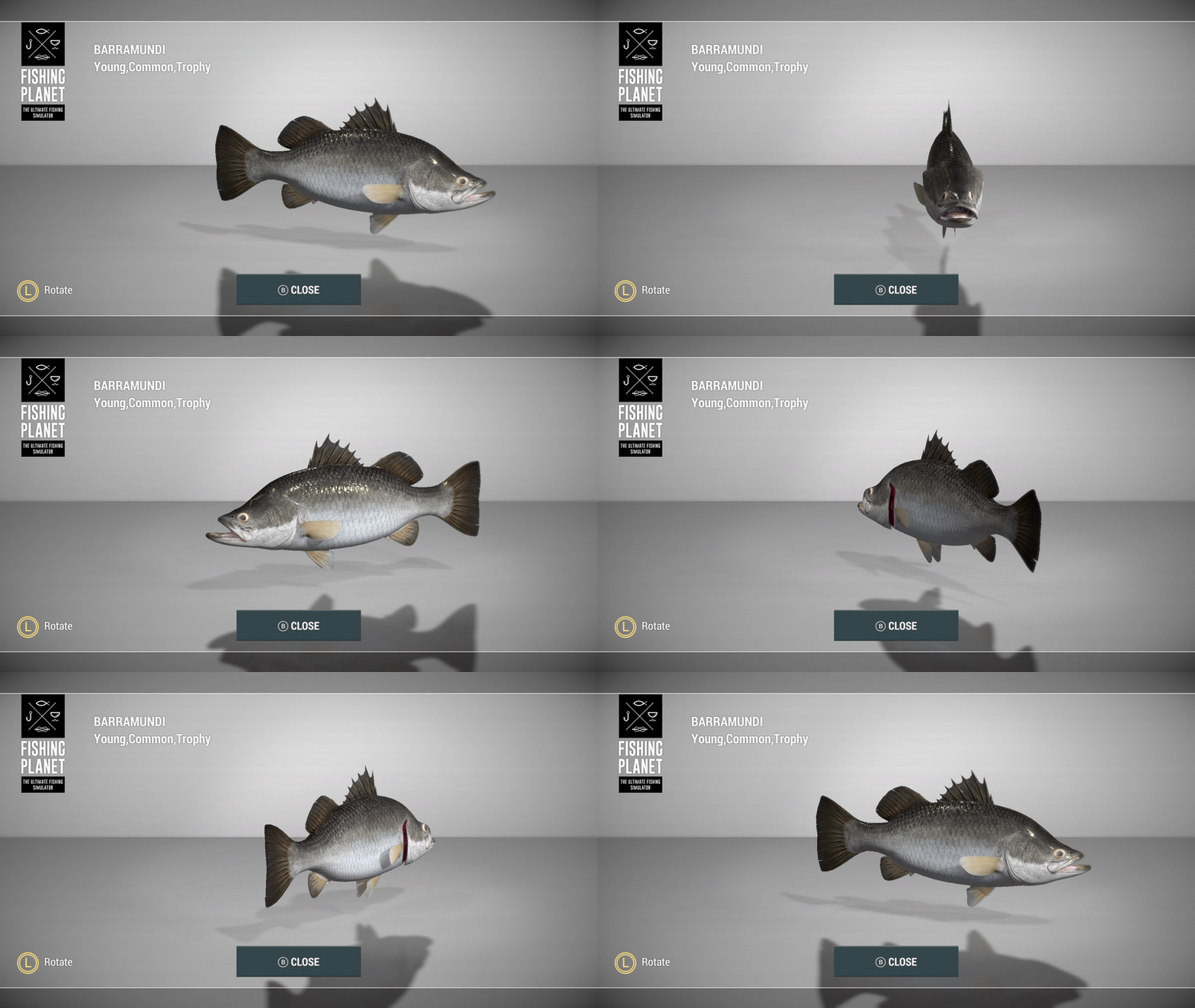
Follow the river downstream to where the tide brings seawater into the estuary. Some fish stay in fresh water, others thrive in the saltier stretches, and a few make their way between the two as they grow. Take barramundi, for example. Some young barra leave the shelter of the estuary’s mangroves and head upriver, then return downstream as adults to spawn. That’s why you can catch the same species both in the river and estuary, but you might find it at different stages of its life.
Now let’s meet the fish you’ll be chasing in Australia’s tropical north, then take a look at a few upcoming features that’ll make your time on the water a little smoother.
Cassowary Coast will be home to 35 fish species, with 110 fish forms in total!
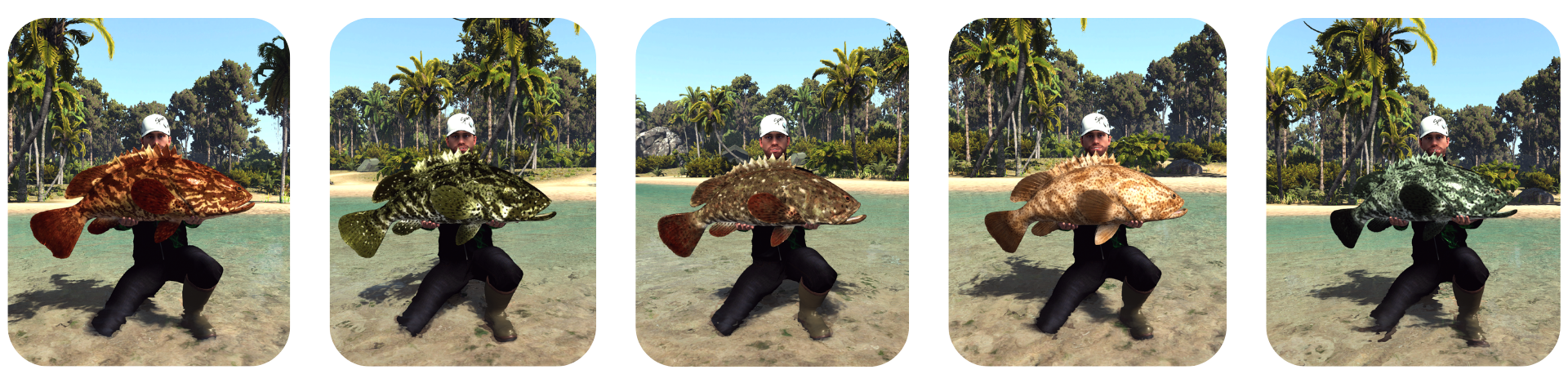
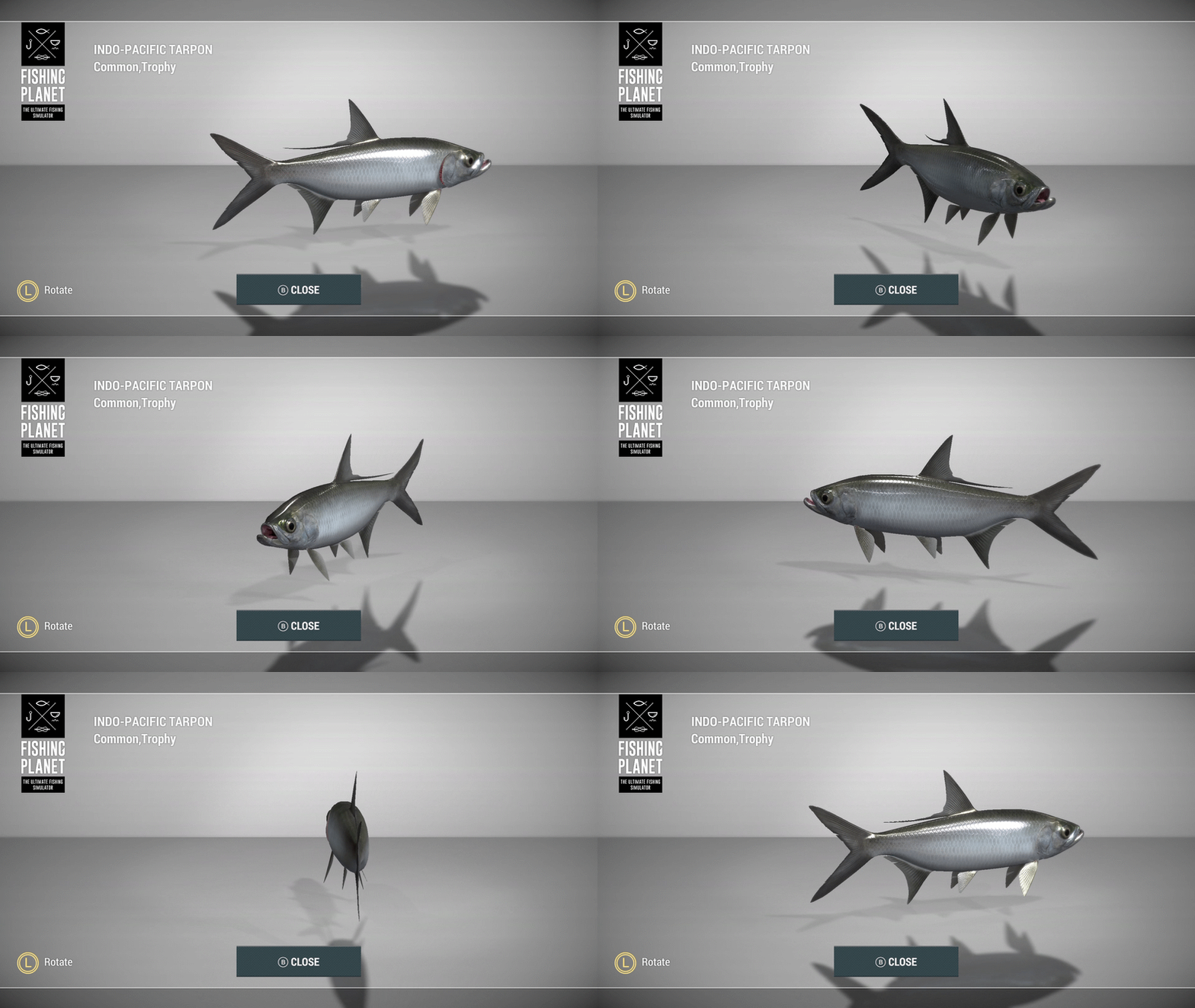
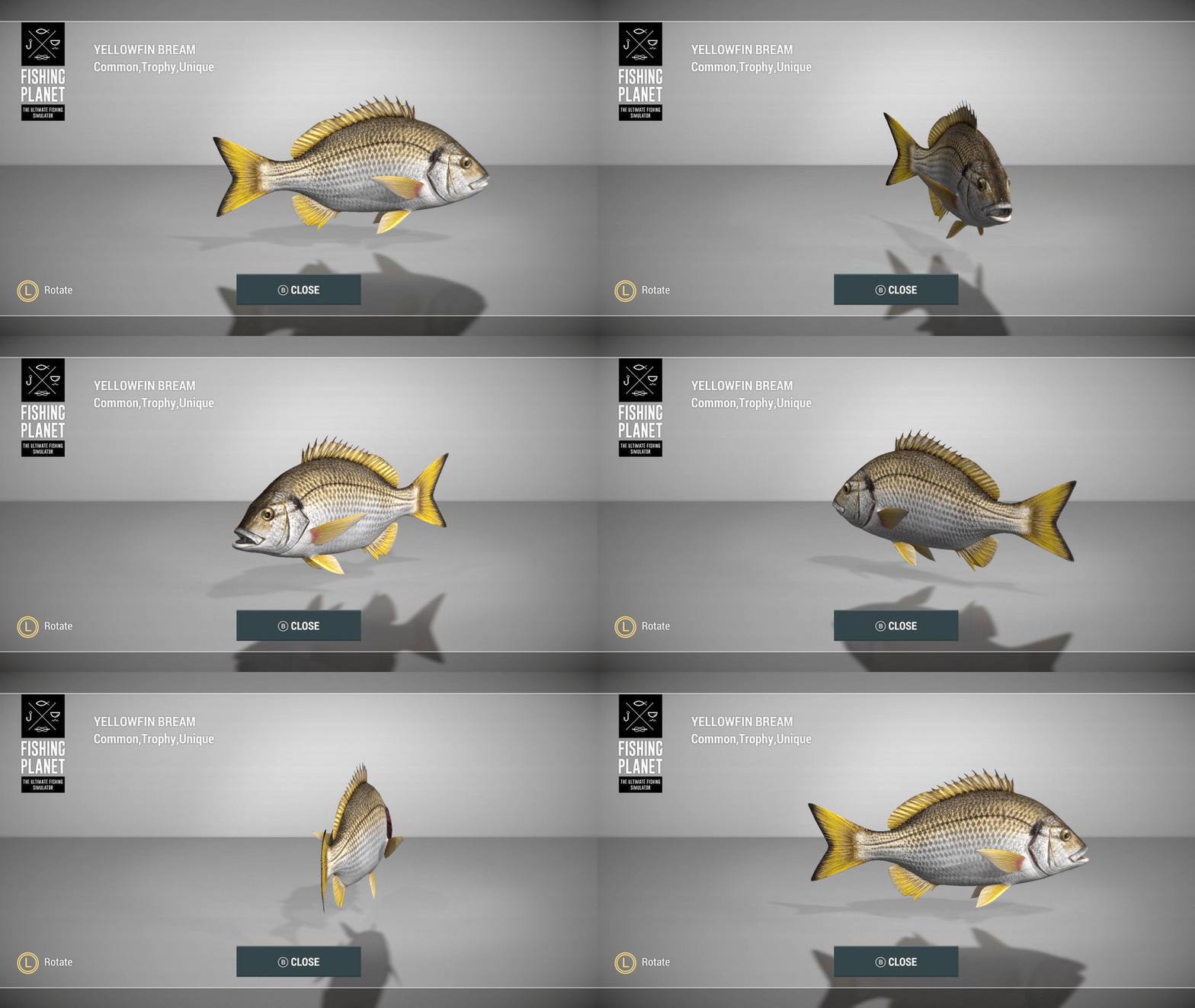
And before we get down to the fish species, we are excited to share something else many of you have been asking for. We’ve added several visual variations for most species at this location, with some fish having up to five different skins! See if you can catch them all and add each variation to your collection.
Freshwater Legends of Australia
Let’s begin our journey in the River Area, where some of Australia’s most fascinating freshwater fish are waiting for you. Some fish are known for their size and strength, while others stand out for their unusual appearance and features.
Murray Cod
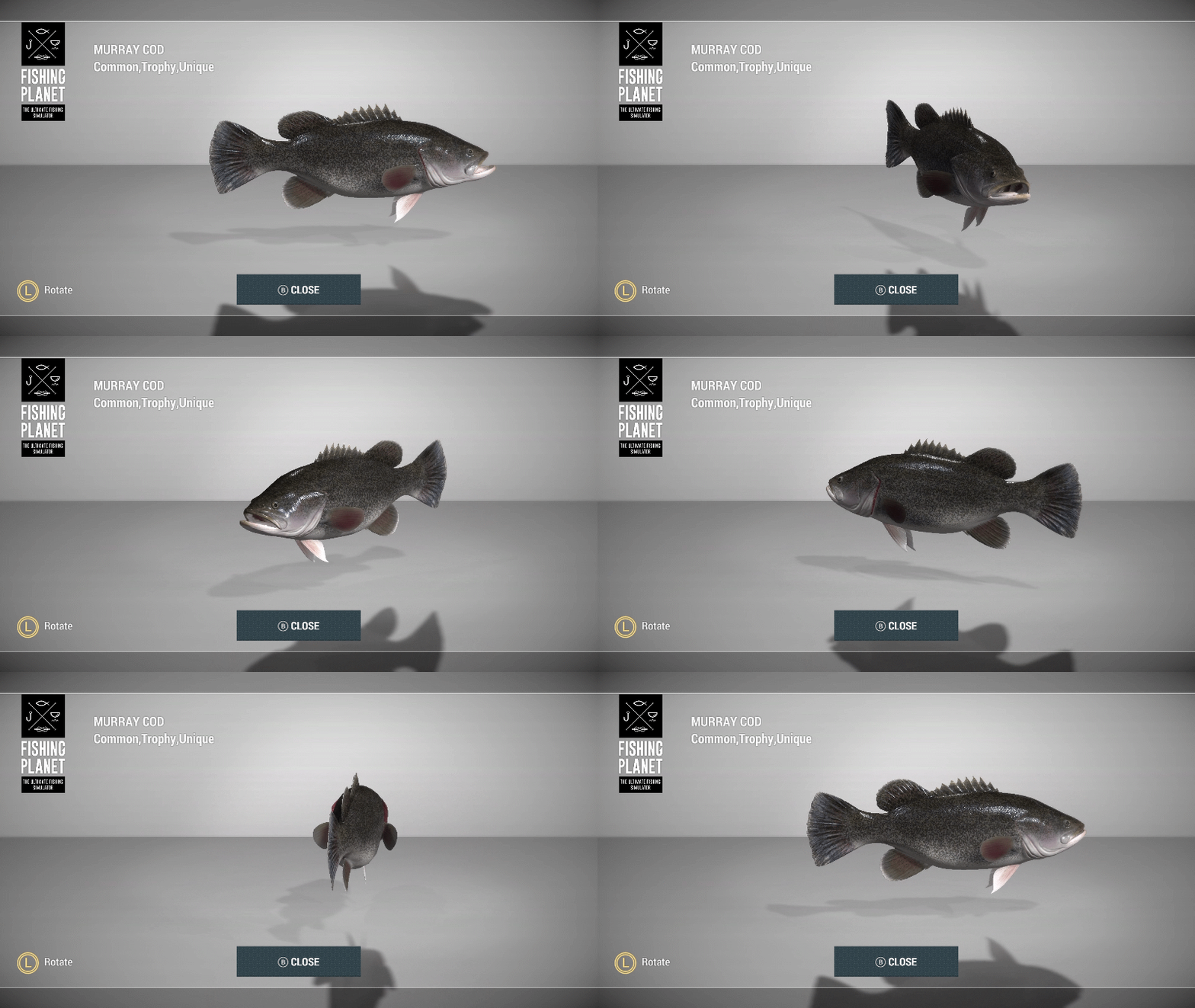
Murray Cod, also known among locals as Goodoo or Burnanga, is Australia’s largest exclusively freshwater bony fish. This powerful ambush predator usually stays close to cover, waiting for prey to come within striking distance. Its diet includes almost any fish smaller than itself, as well as crustaceans such as yabbies. Once hooked, Murray Cod is known for its extremely powerful first run. It is also a long-lived species that can survive for several decades.
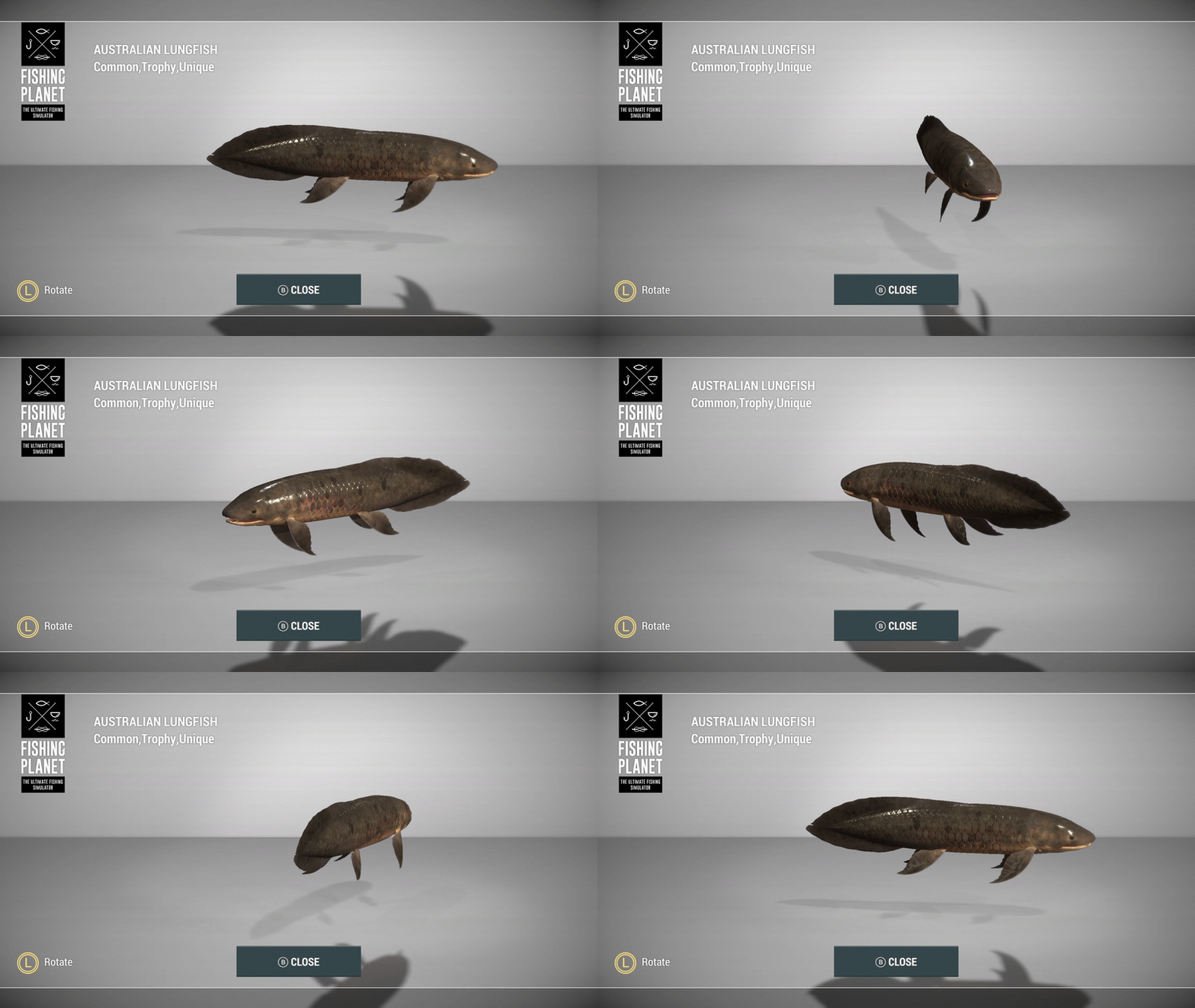
Australian Lungfish
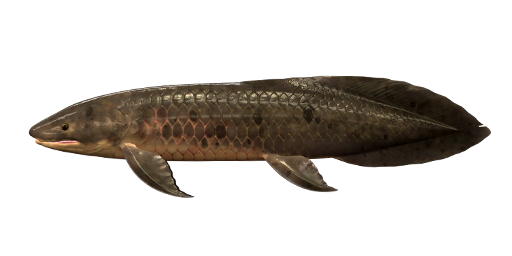
Australian Lungfish, or Burnett River Salmon, as they also call it, is a true relic of Australia’s prehistoric past, a living “dinosaur fish” found nowhere else in the world. This ancient species can breathe through both gills and a single lung, regularly rising to the surface for air. Today, it is a protected species, and fishing for it is prohibited in Queensland. If accidentally caught, it must be released immediately.
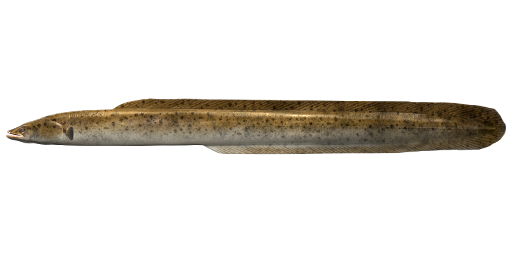
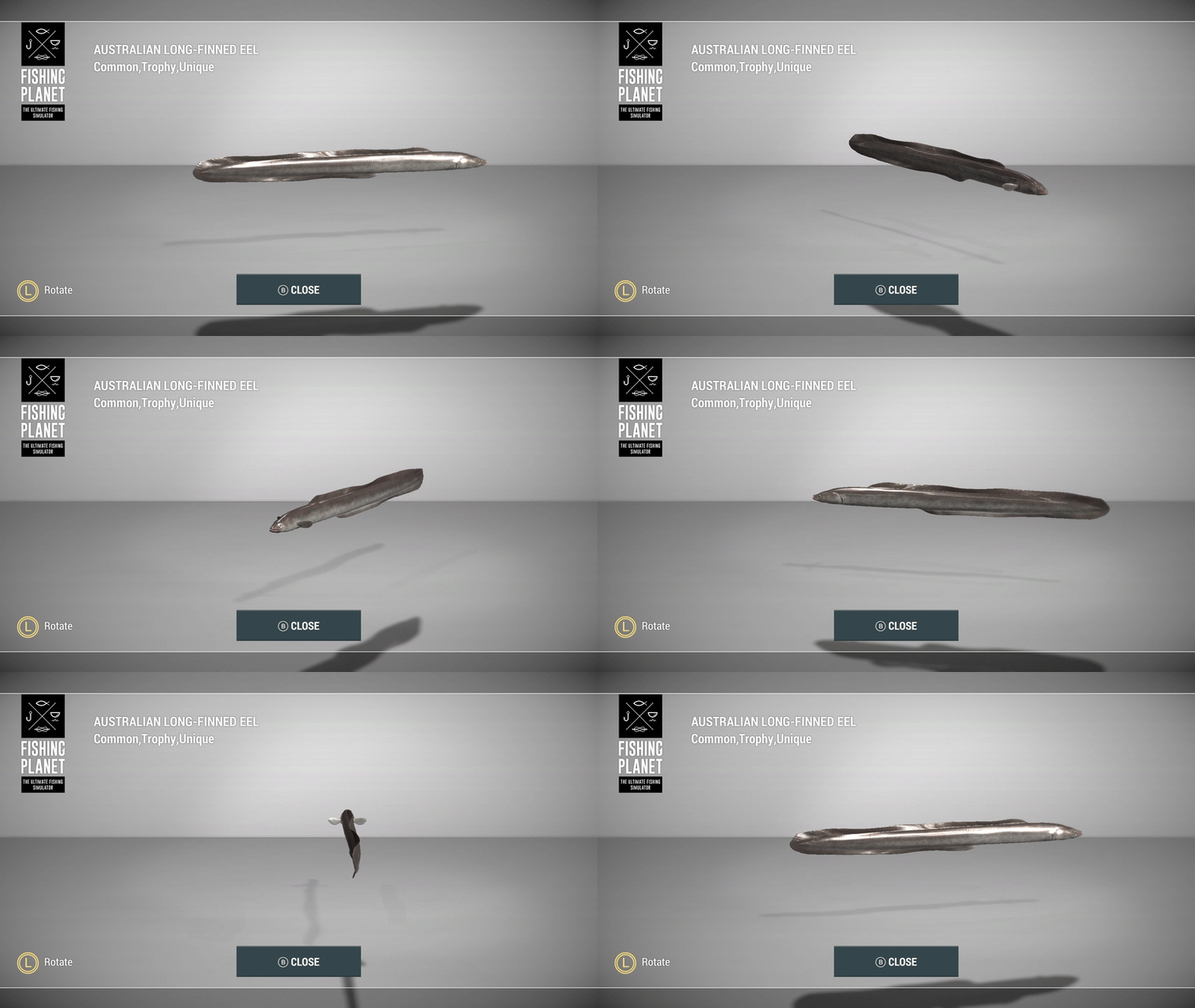
Australian Long-finned Eel
Australian Long-finned Eel has an appearance that can make even experienced anglers a little uneasy. One of Australia’s largest freshwater eels, it prefers to stay hidden around submerged cover and becomes most active after dark and in murky water. As both a predator and scavenger, it readily takes fish-based baits.
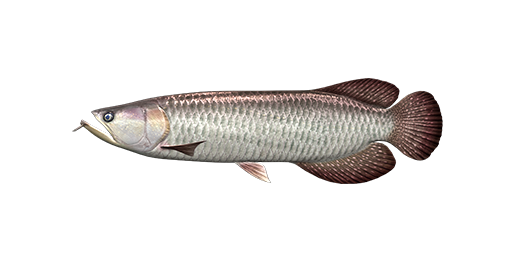
Northern Saratoga
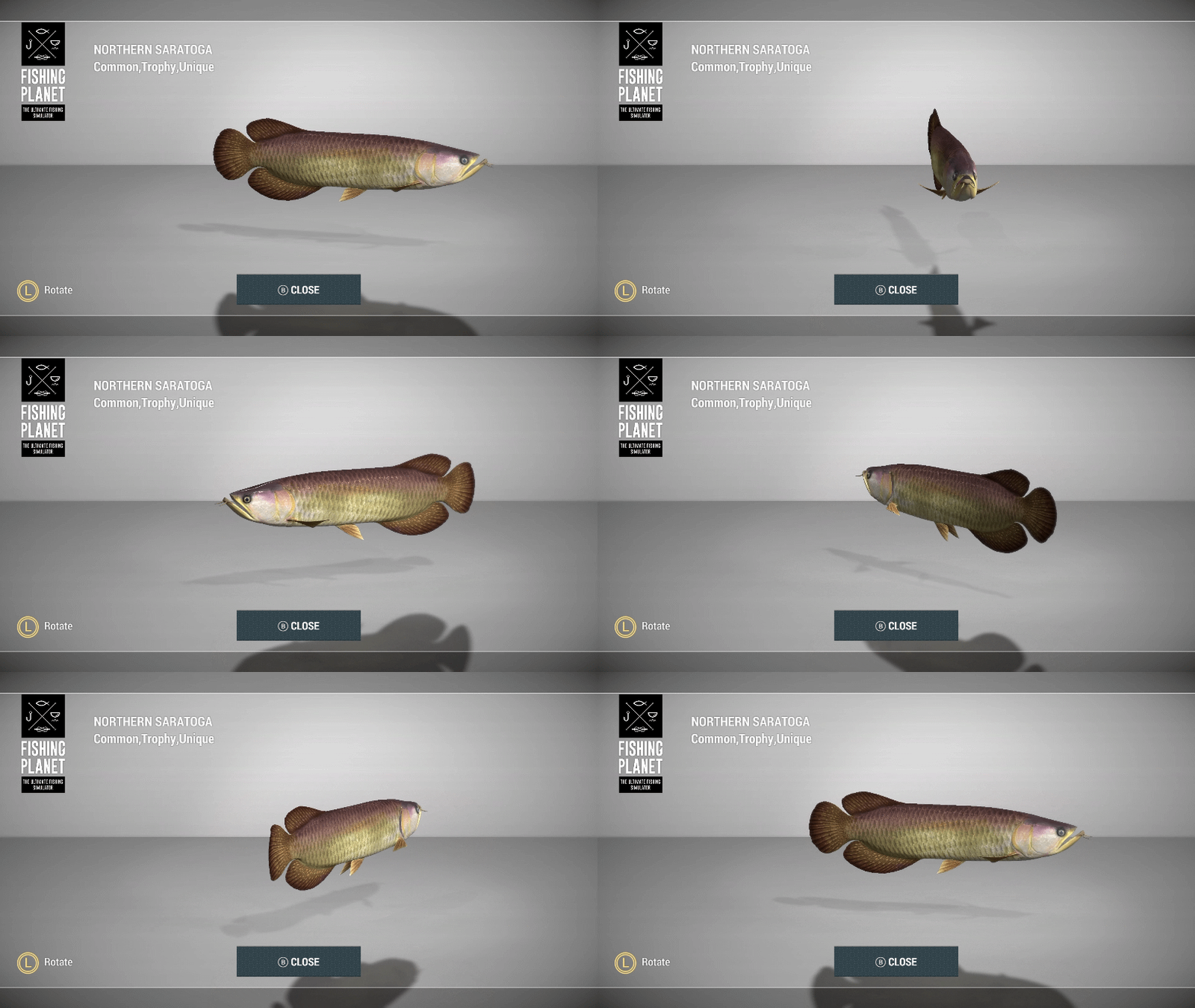
The Northern Saratoga belongs to an ancient lineage of Australian freshwater fish. It’s a rare sight in these waters, making it an especially prized catch. It often feeds near the surface, preying on insects, small fish, frogs, and crustaceans, sometimes leaping from the water to catch its prey. Preferring calm, heavily vegetated waters, this species readily takes both natural baits and artificial lures. Northern Saratoga is most active during daylight hours.
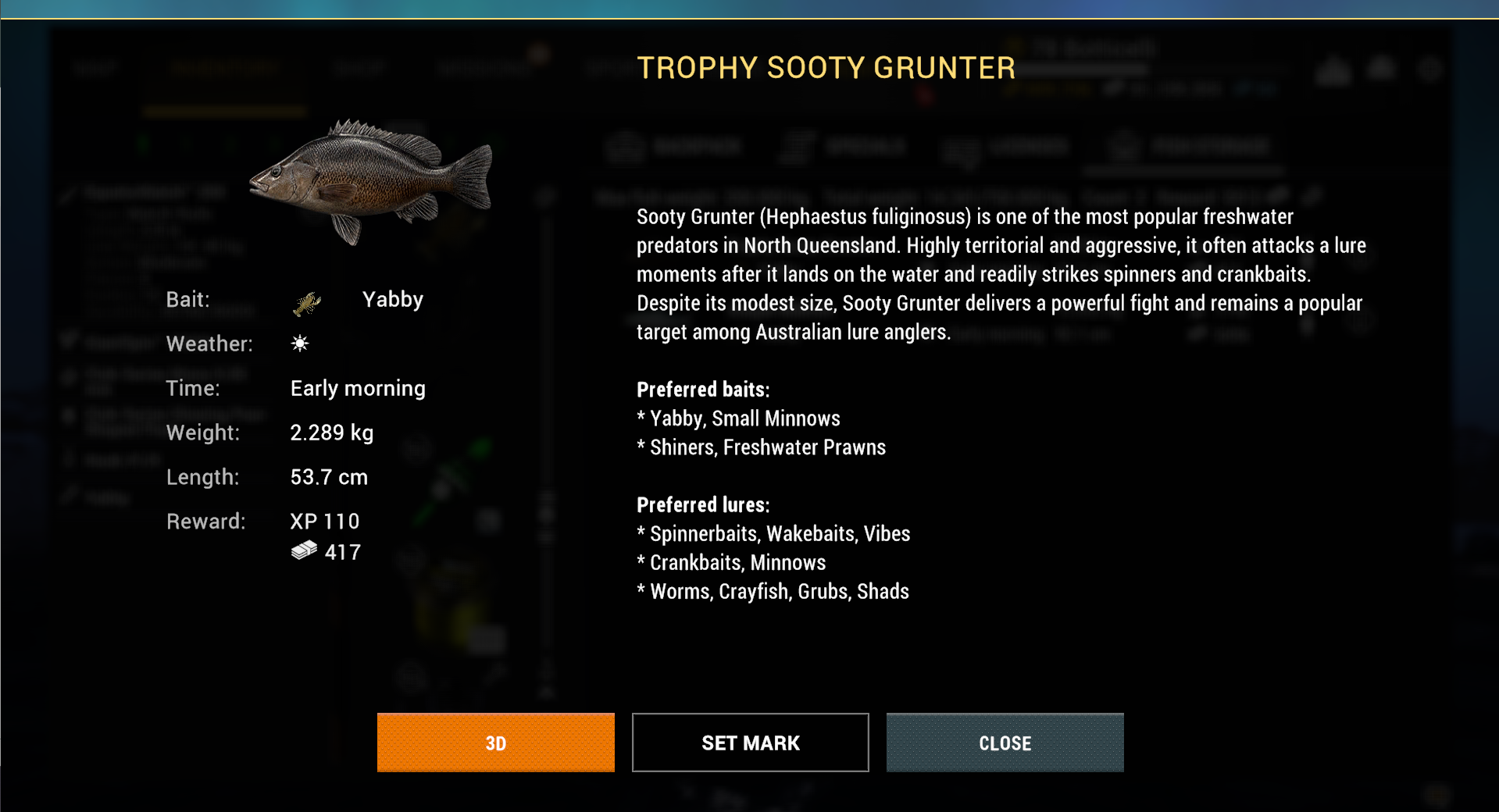
Sooty Grunter
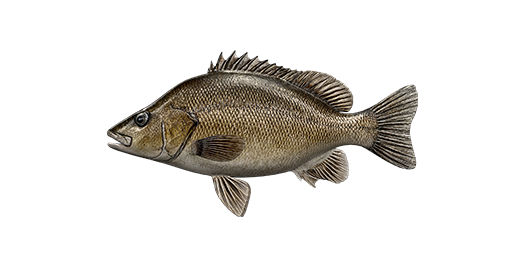
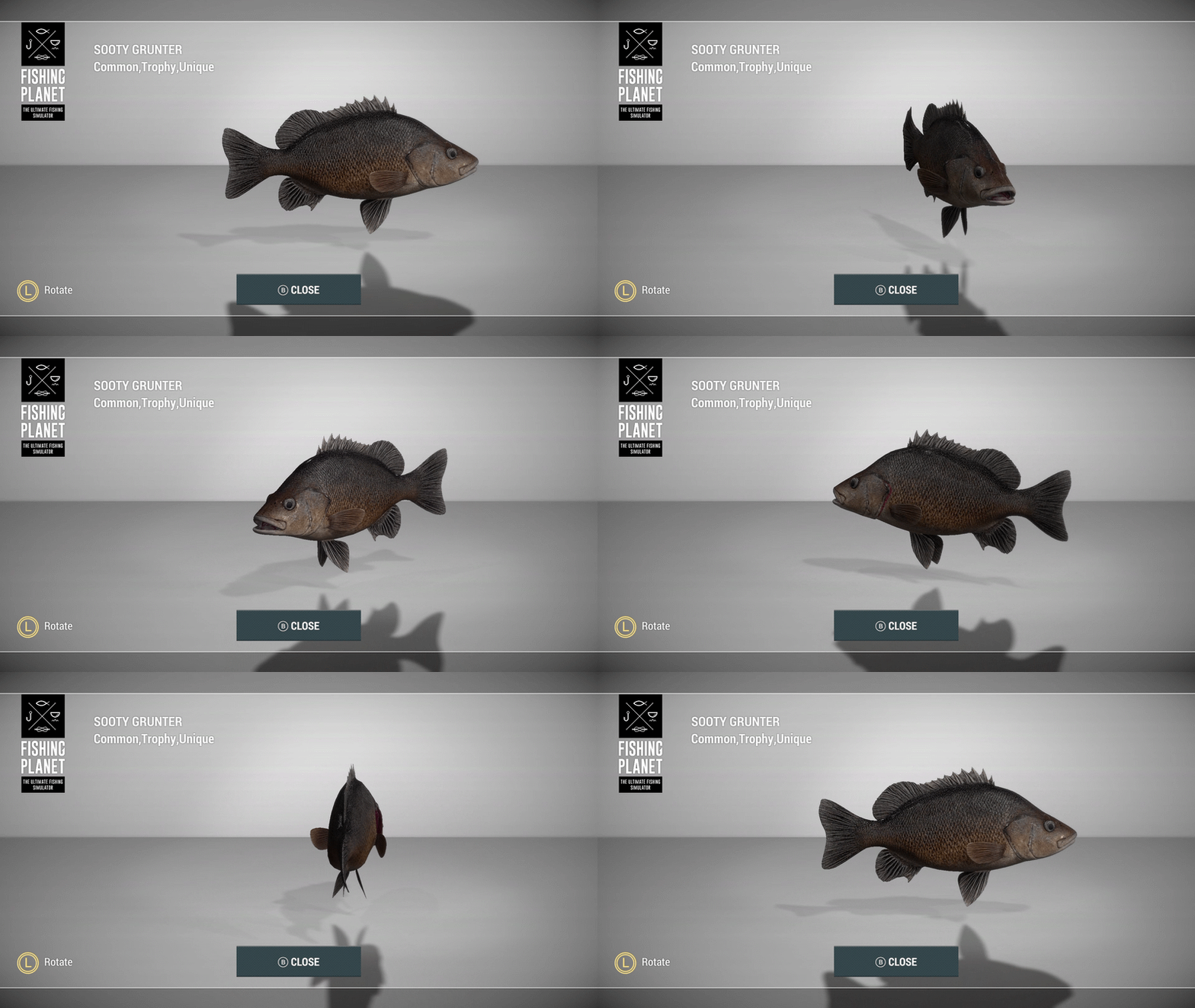
Sooty Grunter is one of the most popular freshwater predators in North Queensland. Highly territorial and aggressive, it often attacks a lure moments after it lands on the water and readily strikes spinners and crankbaits. Despite its modest size, Sooty Grunter delivers a powerful fight and remains a popular target among Australian lure anglers
Australian Bass
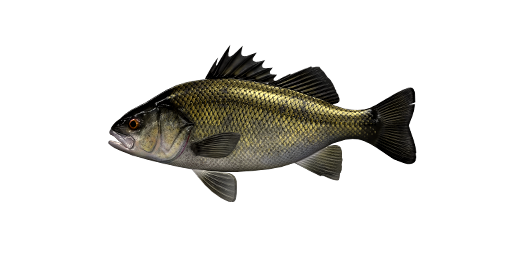
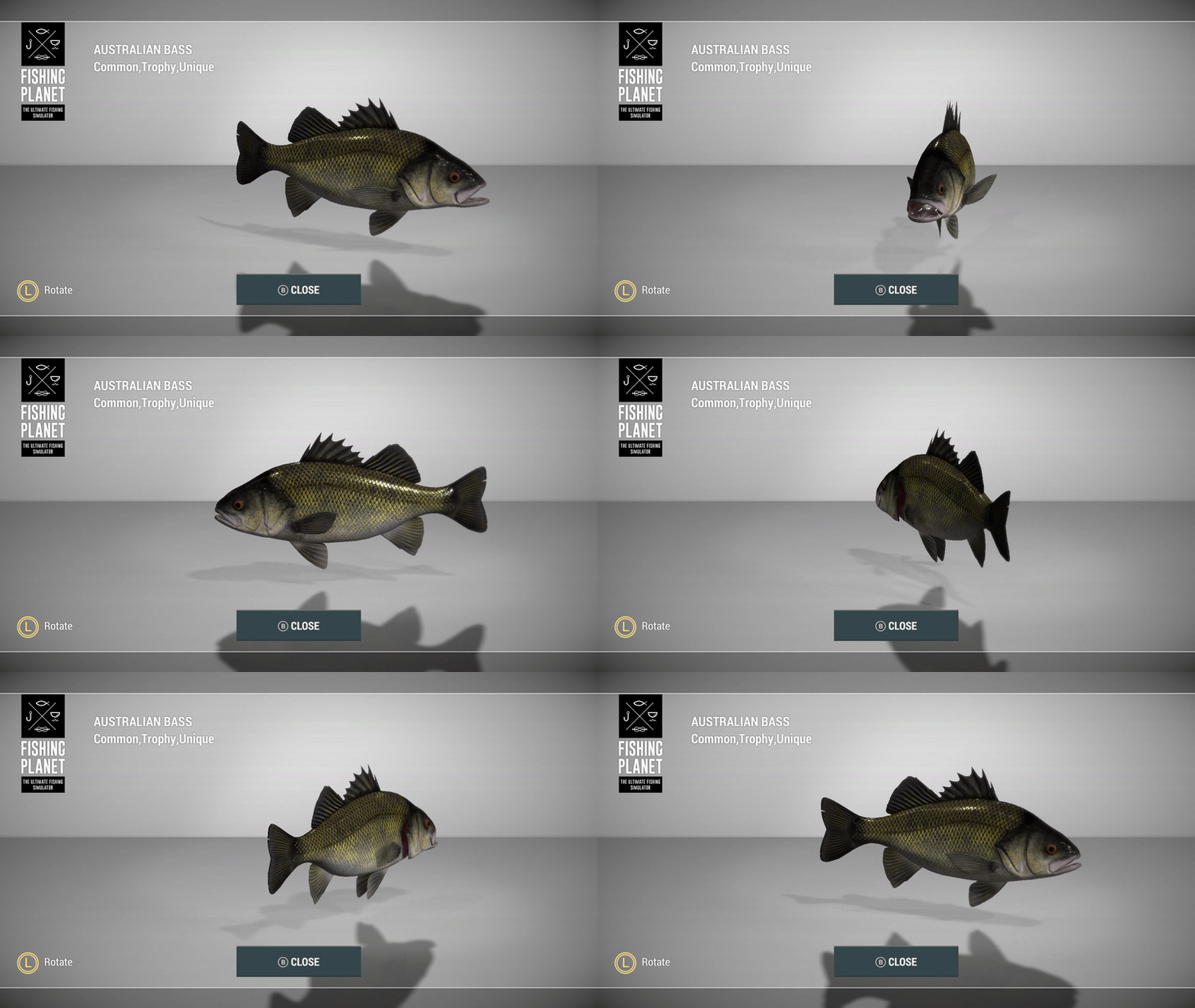
Australian Bass is one of Australia’s most iconic freshwater species. It prefers areas with abundant cover, where it waits in ambush before launching short, explosive attacks on passing prey. Renowned for its aggressive strikes and responsiveness to artificial lures, Australian Bass is particularly well suited to spinning fishing.
Jungle Perch
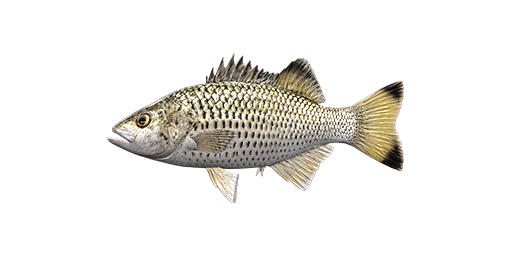
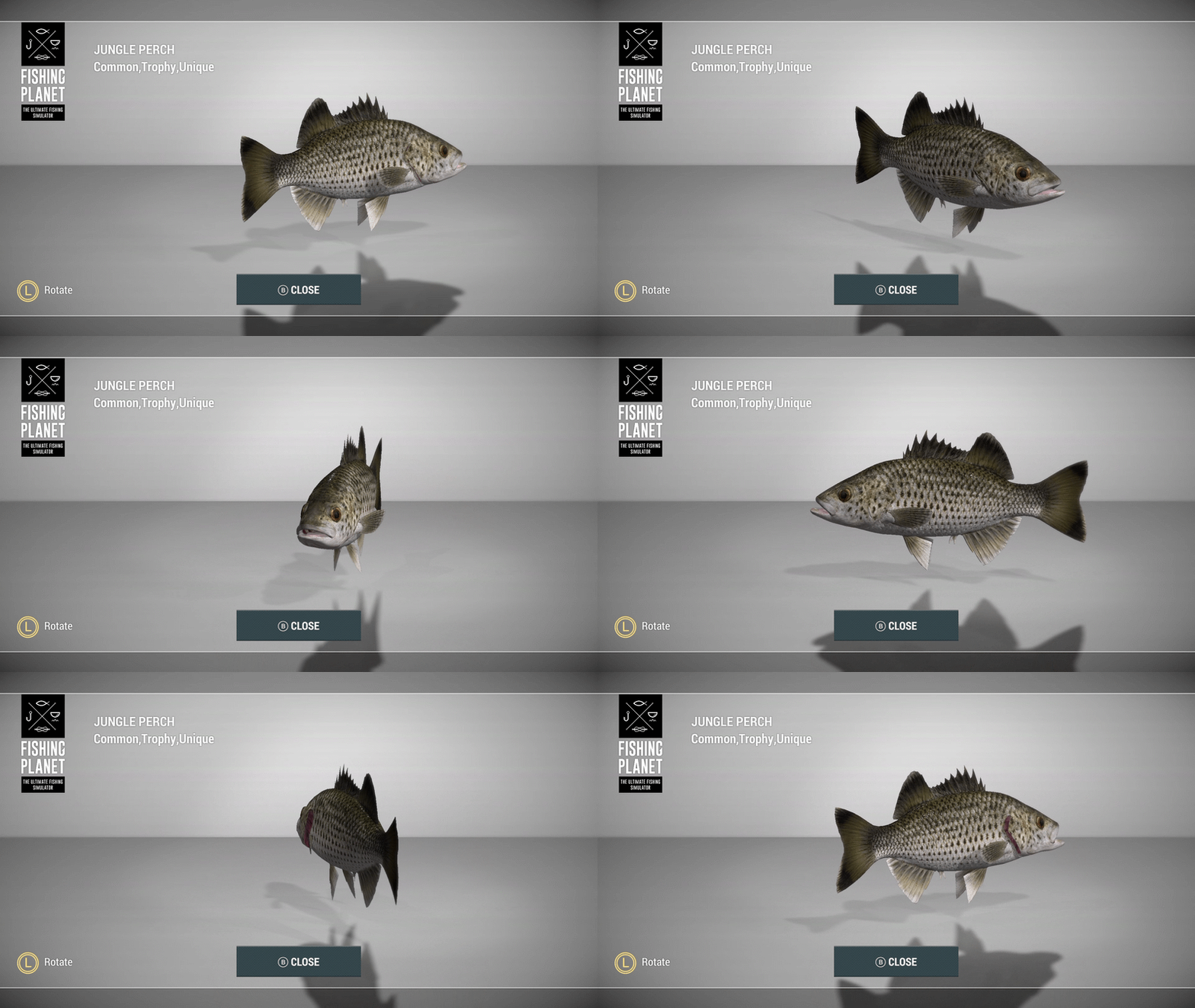
Jungle Perch is one of Australia’s strongest river predators for its size. It often hides around rocks, fallen timber, and overhanging vegetation, where it feeds on insects, shrimp, and small fish. Once hooked, Jungle Perch is known for its powerful runs and frequent jumps, making it a challenging fish to land.
The Fish of the River and Estuary
As we mentioned earlier, you’ll unlock the River Area of Cassowary Coast first and the Estuary Area at a higher level. Some species can be caught in both, though the forms you’ll encounter may vary depending on where you cast.
Let’s take a closer look at the fish inhabiting both areas.
Barramundi
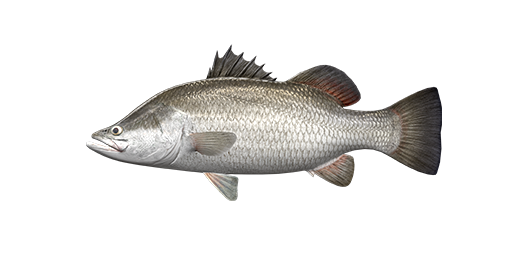
Barramundi or just simply barra gets its name from an Aboriginal language, where it means “large-scaled river fish.” Fittingly, it has become one of Australia’s most iconic sport fish, renowned for its explosive strikes and spectacular jumps after the hookset. Equally at home in freshwater and brackish environments, it feeds on crustaceans, mollusks, and smaller fish. Barramundi is most active at dawn, dusk, and around tidal changes, making these periods especially productive for anglers.
Indo-Pacific Tarpon
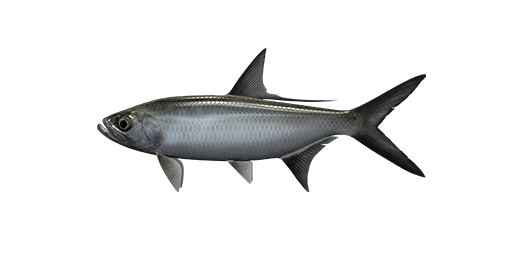
Indo-Pacific Tarpon may be the smaller cousin of the mighty Atlantic Tarpon, but it shares the same talent for spectacular jumps once hooked. This species regularly enters freshwater, with juveniles often forming large schools in estuaries. Adults usually hunt near the surface and in the middle layers of the water, making Indo-Pacific Tarpon an exciting target for sport anglers.
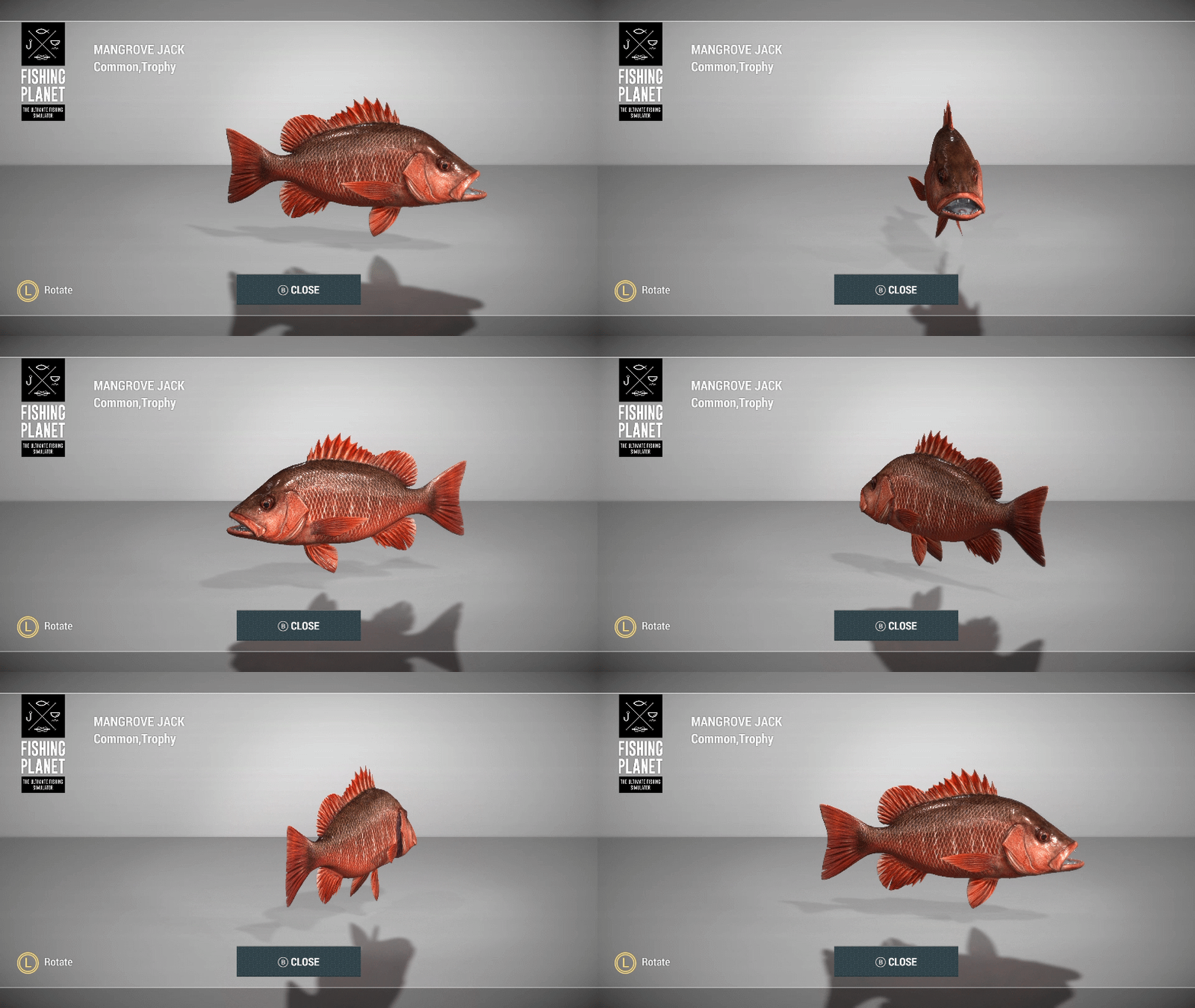
Mangrove Jack
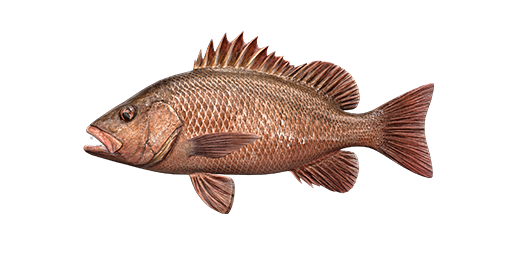
Mangrove Jack is one of the most aggressive predators found in Australian estuaries. It usually strikes close to cover and immediately tries to reach nearby snags or mangrove roots. Its diet includes fish and crustaceans. Despite its relatively modest size, this species is famous for its extremely powerful first run.
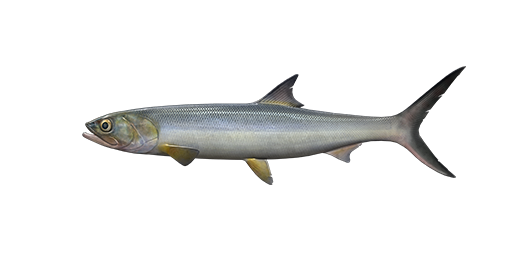
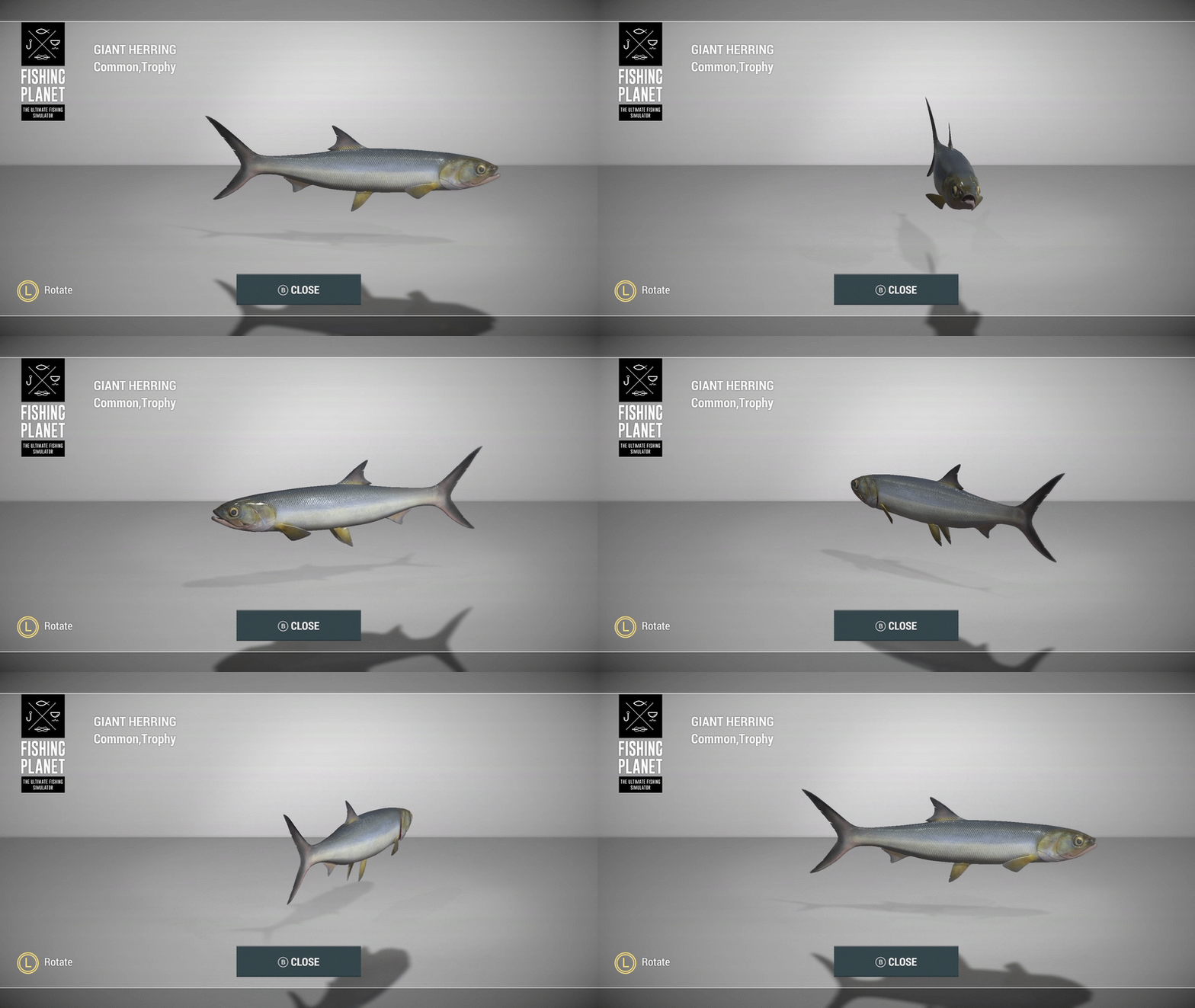
Giant Herring
Giant Herring is a fast-moving predator that feeds mainly in the upper layers of the water column. It often hunts schools of anchovies, sardines, and juvenile mullet. Most anglers target this species with artificial lures, making fast retrieves especially effective. Giant Herring is most active during daylight hours.
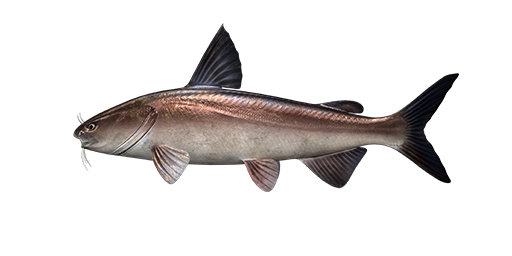
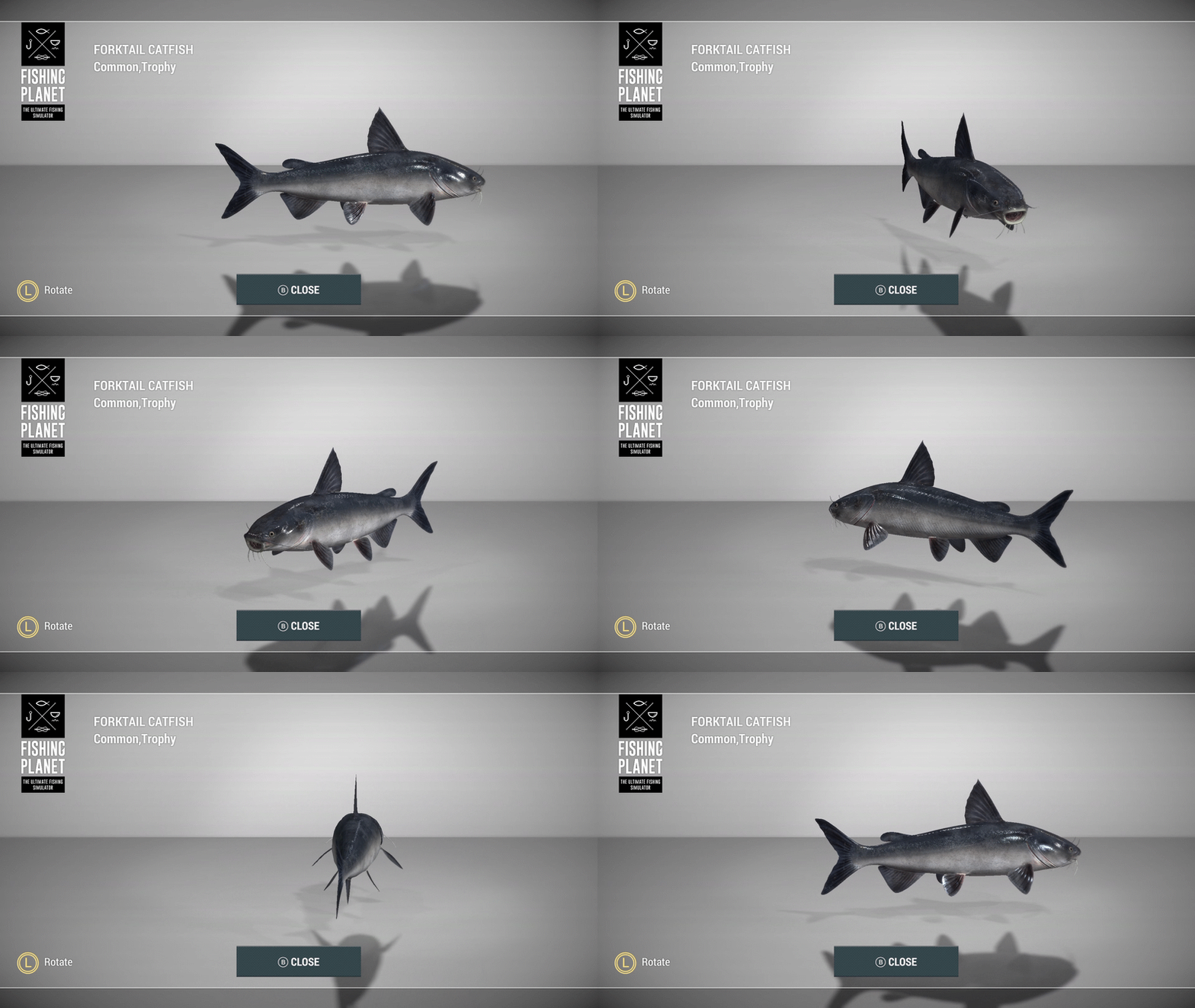
Forktail Catfish
Forktail Catfish is one of Australia’s most widespread catfish species. It is easily recognized by the strong spines on its dorsal and pectoral fins. Often found in small groups near the bottom, it feeds on fish, crustaceans, mollusks, and other benthic invertebrates. Fork-tailed Catfish remains active both during the day and at night.
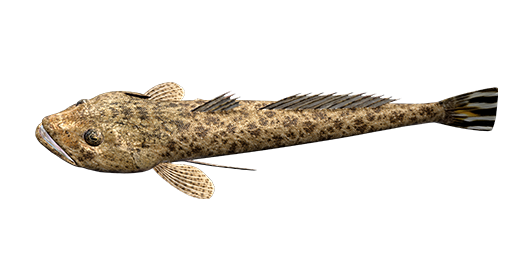
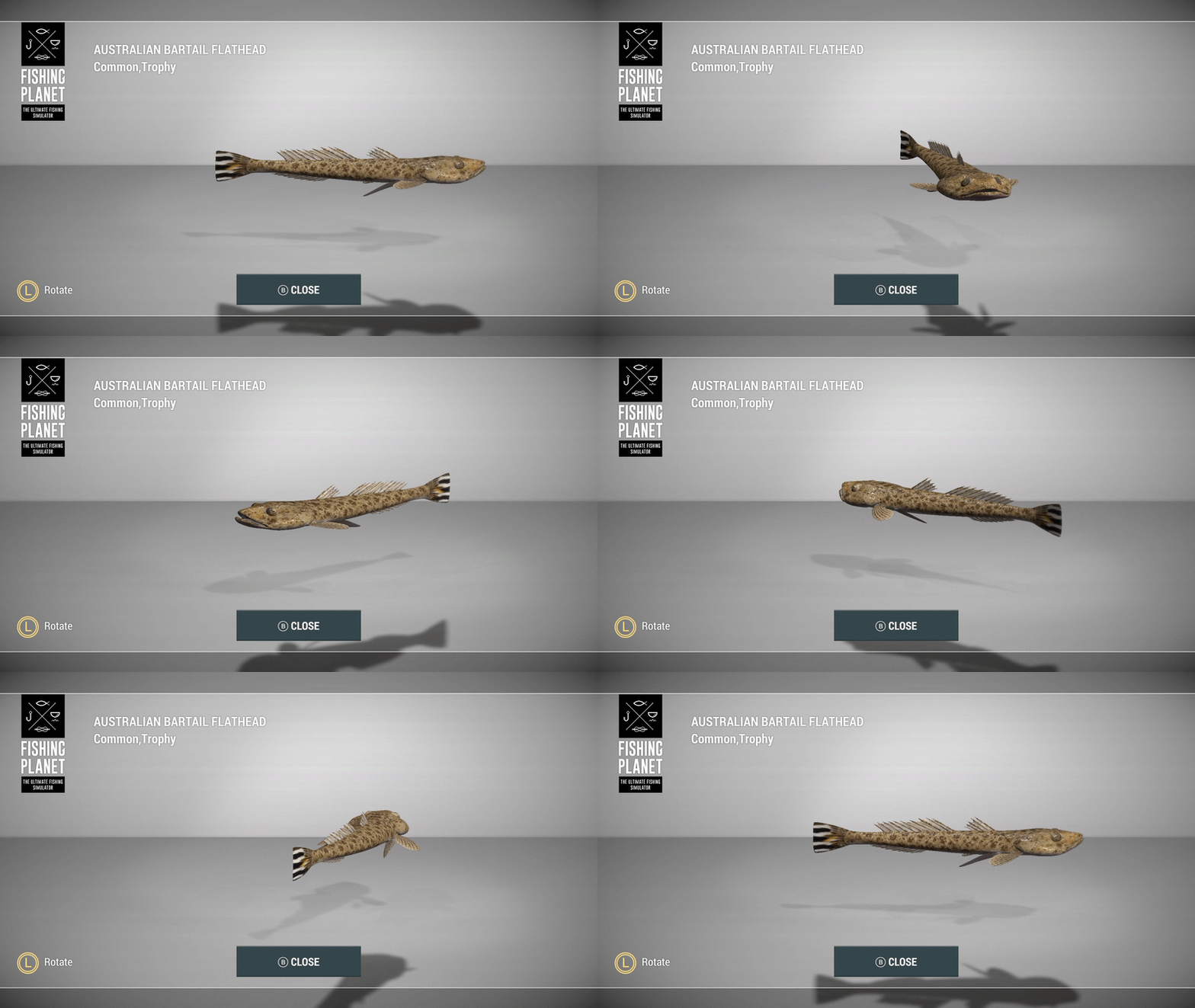
Australian Bartail Flathead
Australian Bartail Flathead is a bottom-dwelling ambush predator most commonly found over sandy and muddy areas of estuaries. It feeds mainly on fish, shrimp, and crabs, striking with a sudden burst of speed when prey comes close. Thanks to its aggressive takes and willingness to attack artificial lures, it is one of the most popular species for spinning in Australia.
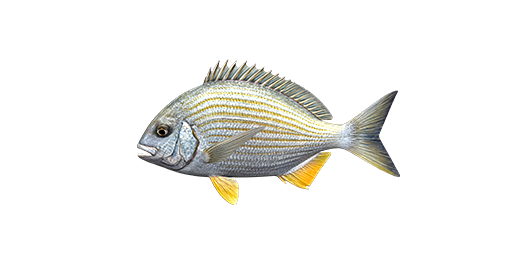
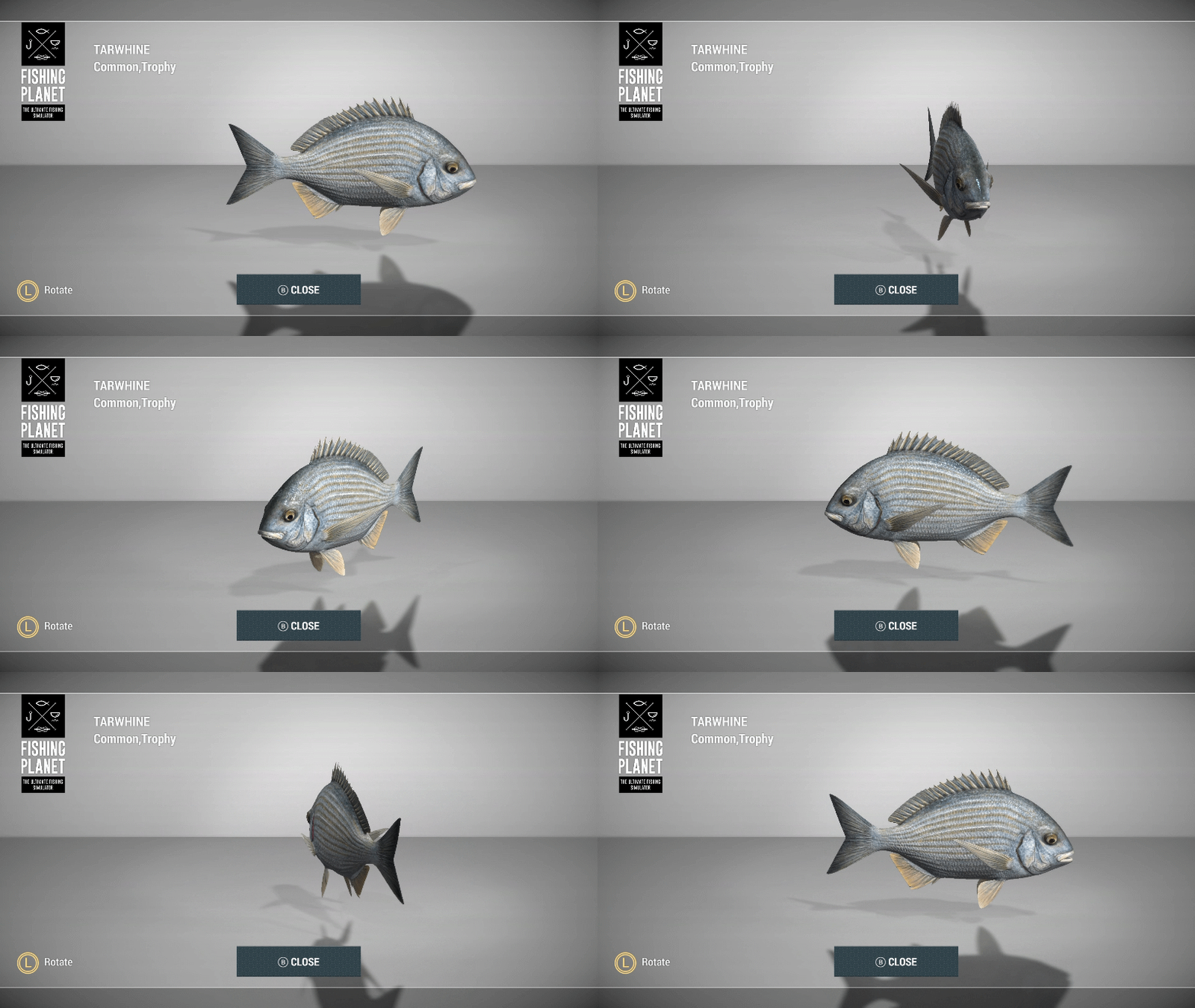
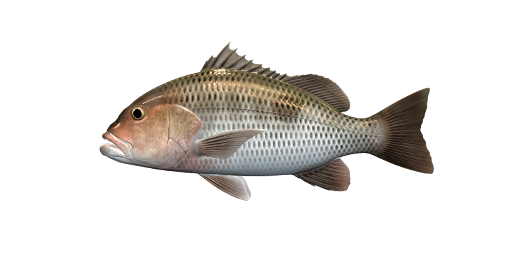
Tarwhine
Tarwhine is a coastal species that regularly enters estuaries and often forms larger schools. It feeds mainly near the bottom, searching for mollusks, crustaceans, worms, and other small invertebrates. Juveniles are commonly found in shallow estuarine waters, while larger fish tend to move into deeper areas. Tarwhine is also a popular angling species and is commonly caught on hook and line.
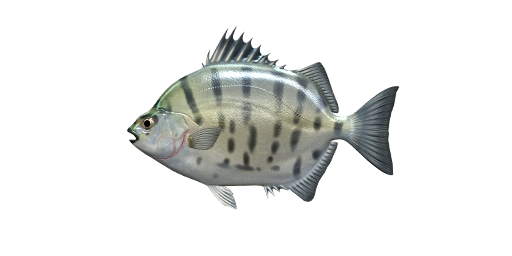
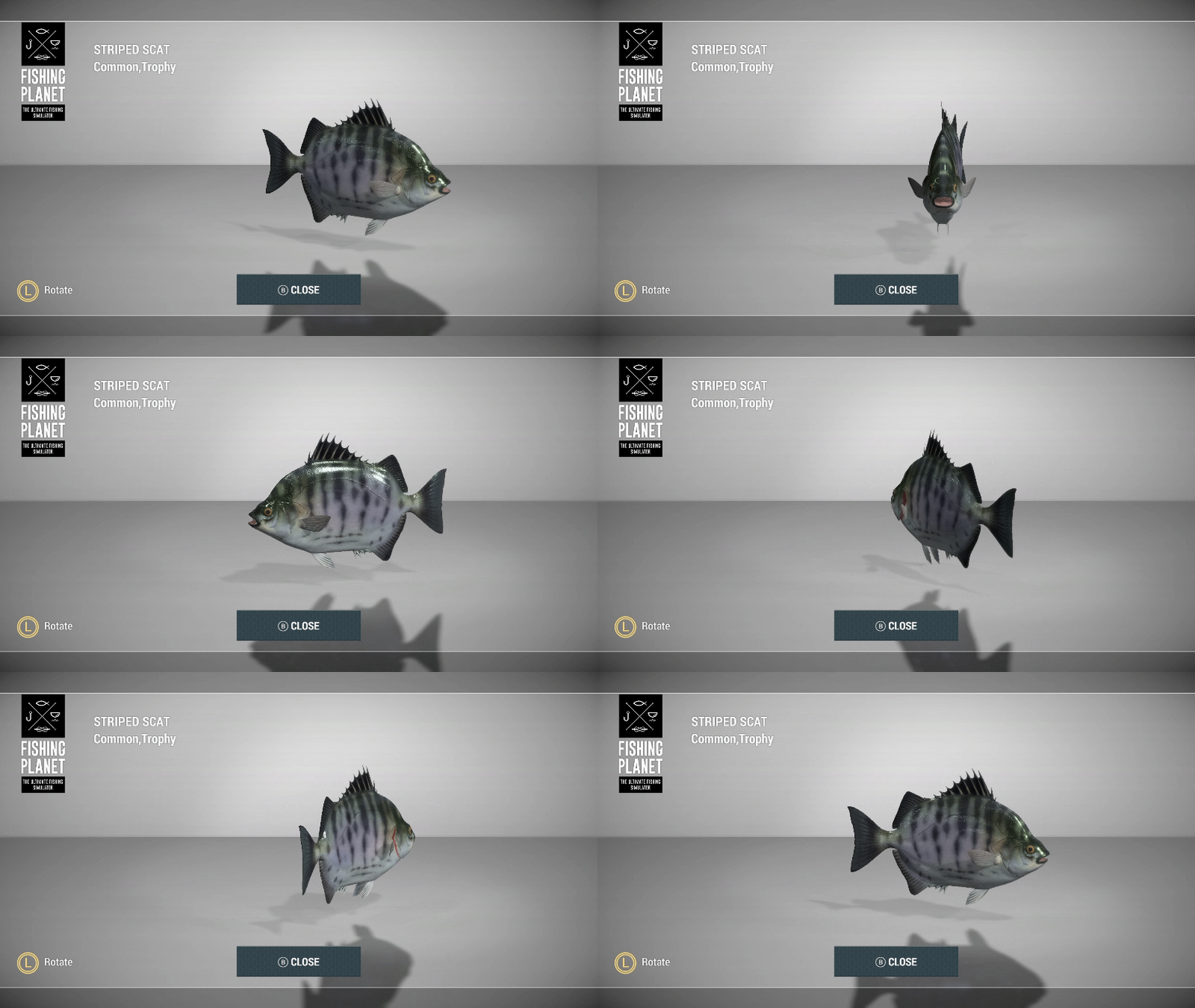
Striped Scat
Striped Scat is easily recognized by its deep, strongly compressed body and distinctive striped pattern. Its diet consists mainly of algae and small bottom-dwelling invertebrates. This species is commonly caught on float or bottom tackle using small hooks, making light setups a good choice when targeting it.
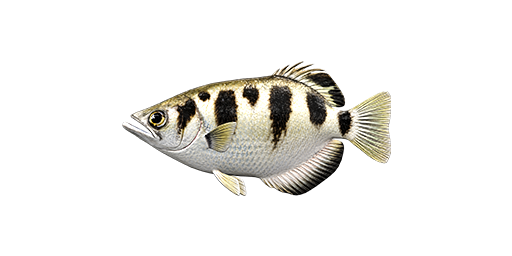
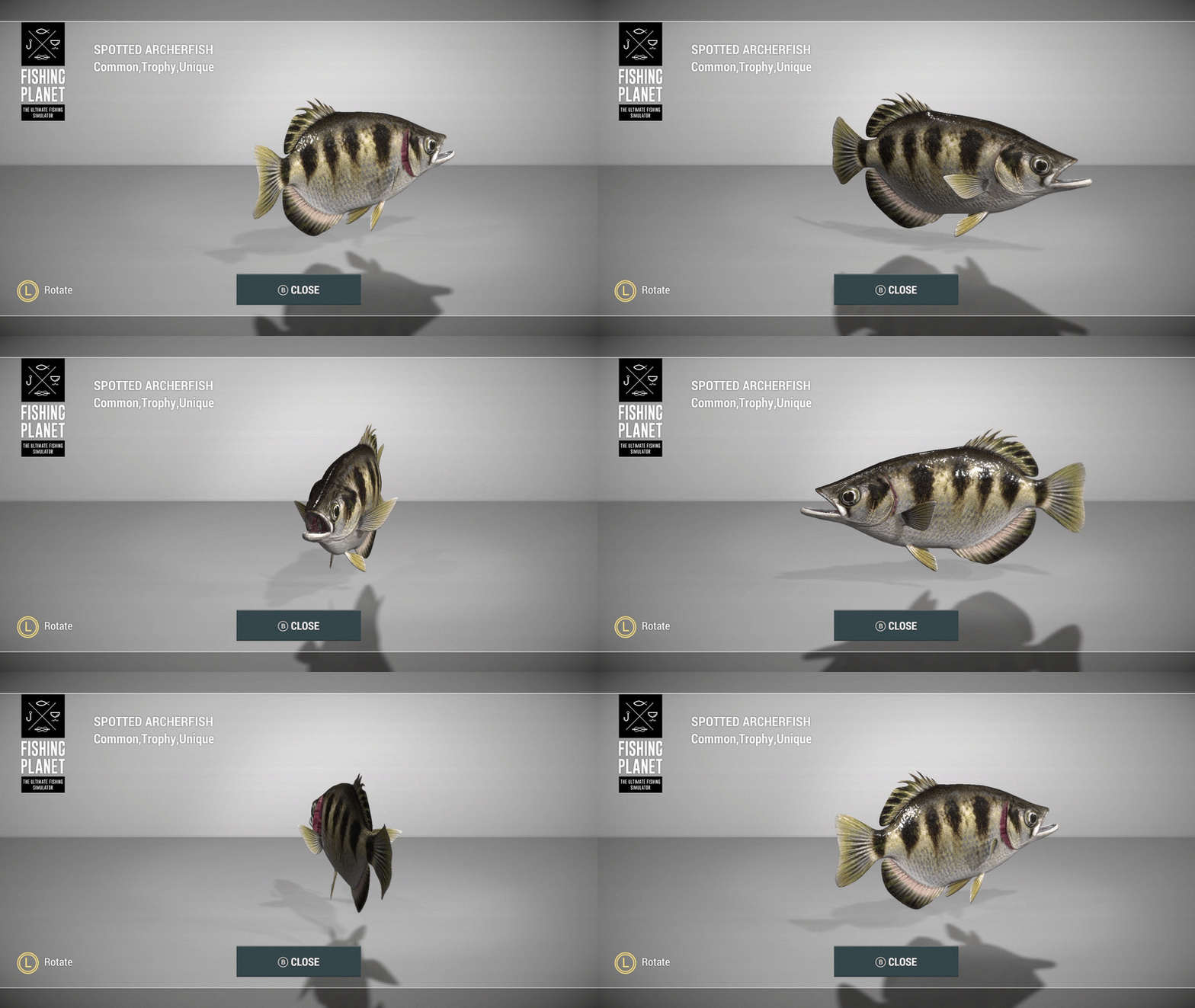
Spotted Archerfish
Spotted Archerfish is a true sharpshooter of the fish world, using jets of water to knock insects from branches and leaves. Even more impressive, it can aim surprisingly well even from below the surface. Often gathering in small schools near overhanging vegetation, Archerfish are always on the lookout for their next shot.
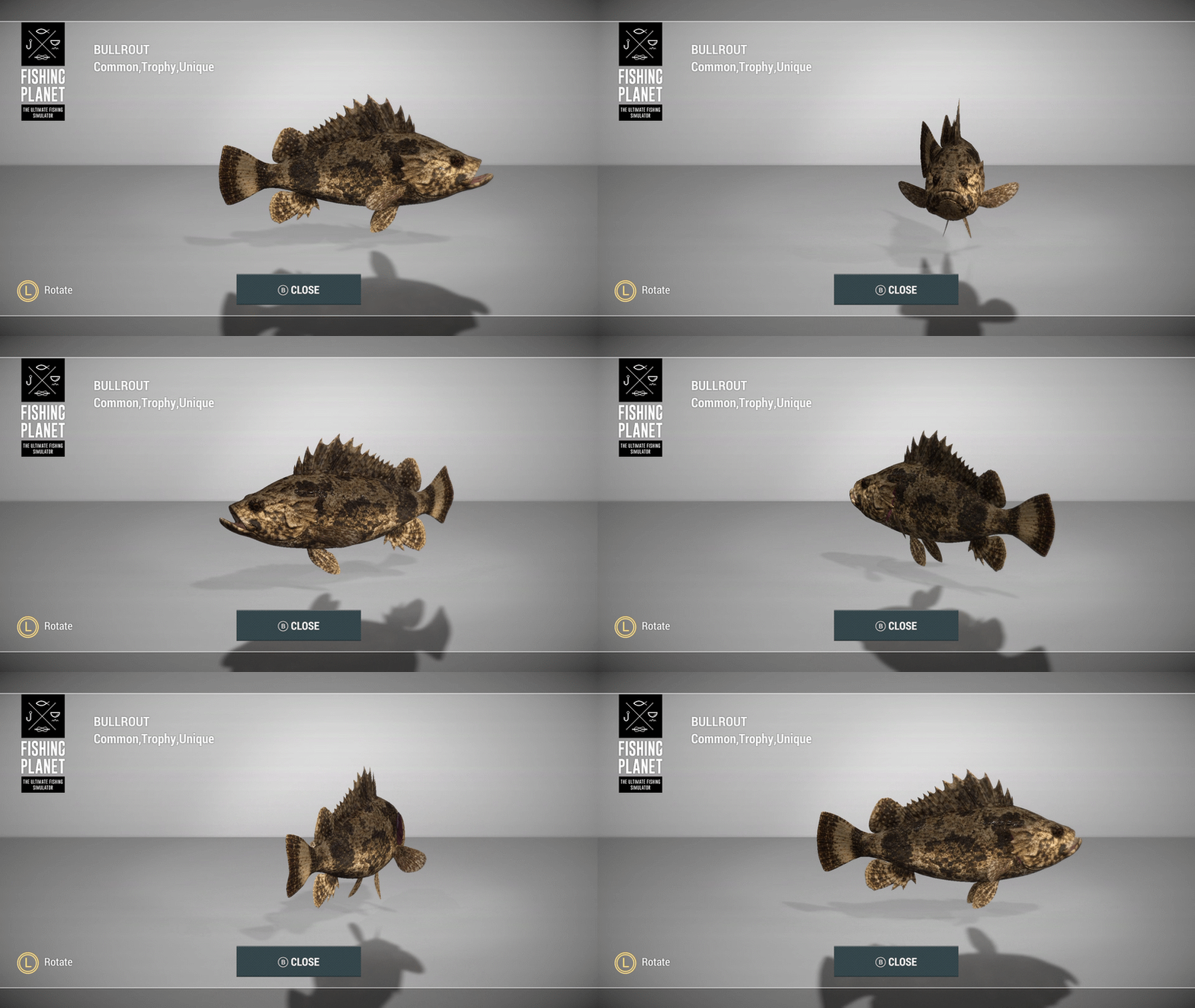
Bullrout
Bullrout is a bottom-dwelling ambush predator that spends much of its time motionless while waiting for prey. It feeds mainly on small fish, shrimp, and aquatic insects. Its dorsal fin has highly venomous spines that can cause severe pain if touched. Small lures worked slowly near the bottom or around cover are especially effective for this species.
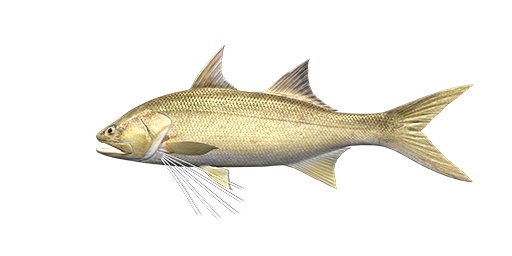
Threadfin Salmon
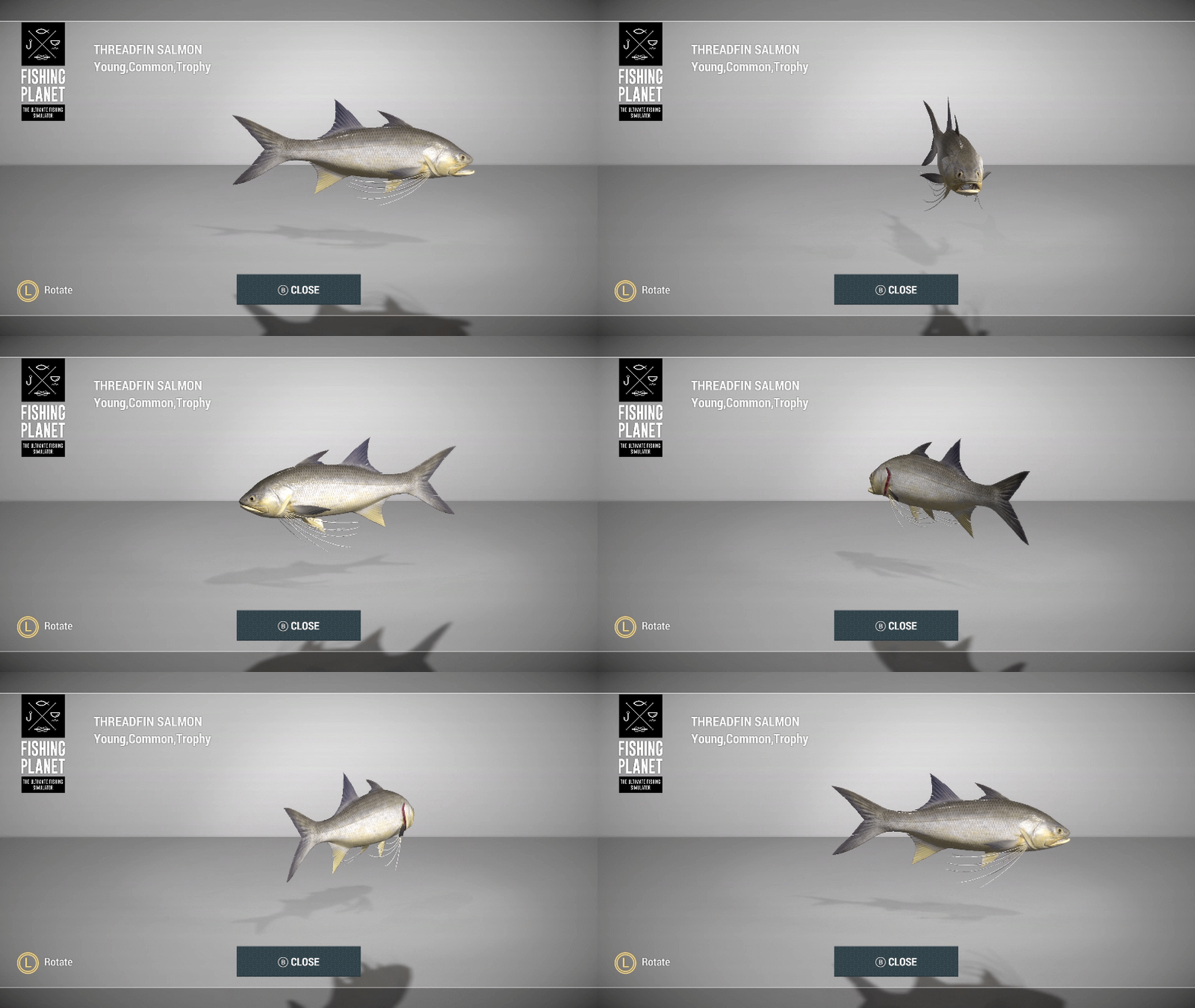
Threadfin Salmon may have “salmon” in its name, but it isn’t actually a salmon, the name comes from the pinkish color of its flesh. It is one of the hardest-fighting estuarine fish, known for its strength and endurance. Often found in turbid waters, it uses long sensory filaments beneath its jaw to locate prawns and fish. Threadfin Salmon frequently form large schools and become especially active during tidal changes.
Life in the Estuary
Now it’s time to leave the river behind and explore the Estuary Area, where a whole new variety of fish is waiting for you.
Some of these fish will put your skills and gear to the test, while others might surprise you with their appearance or behavior.
Let’s take a closer look at the 17 species you’ll find in the Estuary Area.
Bull Shark
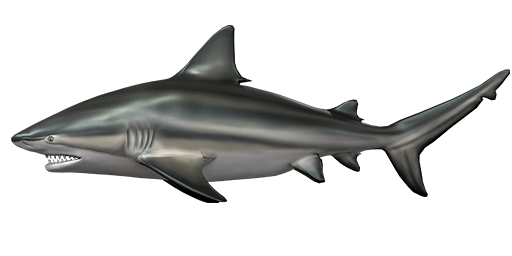
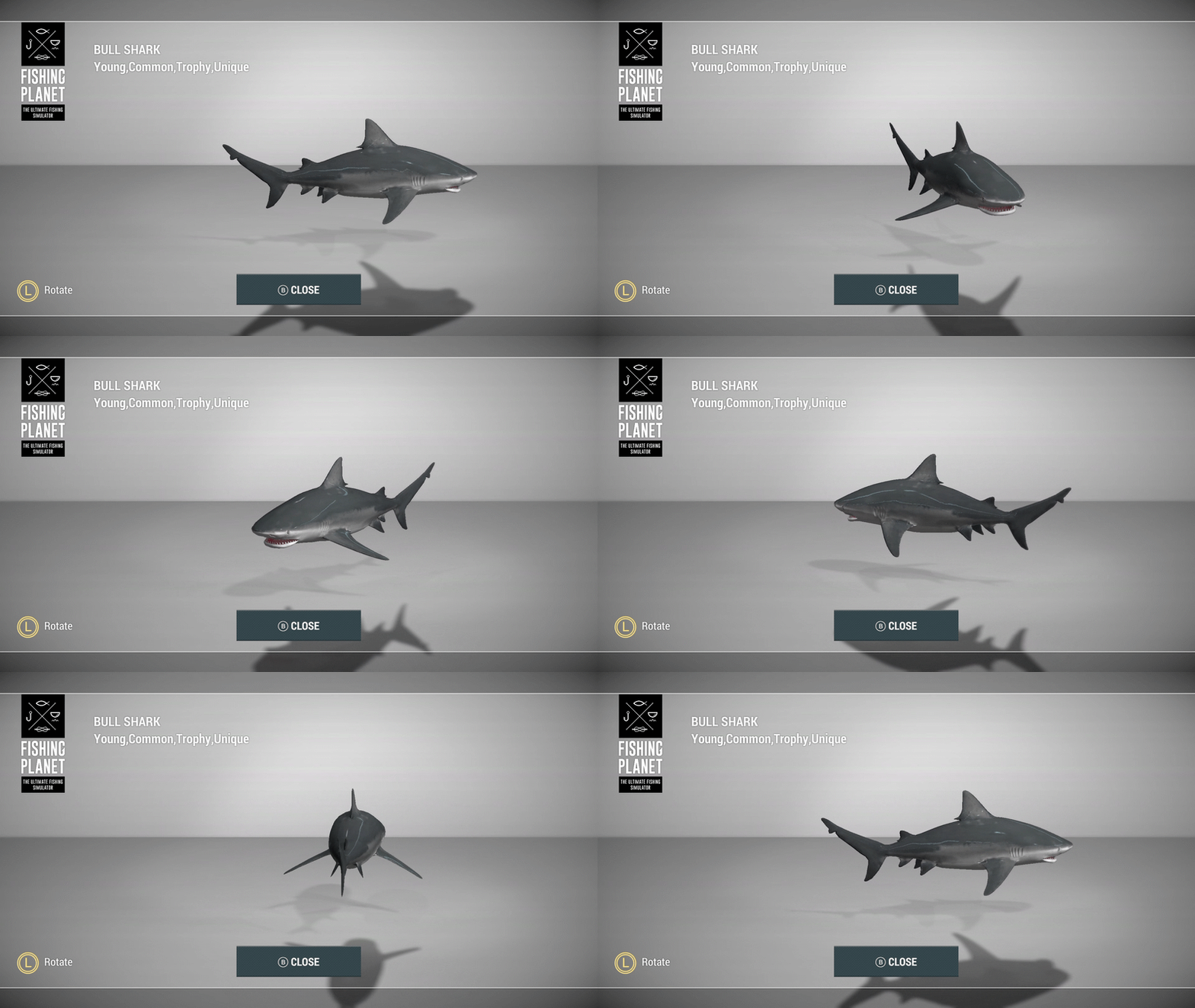
Bull Shark inhabits tropical and subtropical waters of all oceans, but most importantly, it’s capable of traveling hundreds of kilometers into fresh waters. The most aggressive of their genus, these gray giants have white bellies, distinct long bodies and short snouts. Their size is impressive: one can easily encounter almost a 3-meter specimen weighing up to 200 kg even in fresh waters. These sharks prefer to hunt in muddy waters on their own, sneaking up to the prey and dashing suddenly before the attack. There have been attacks on humans, so be extremely cautious around its habitat! This predator’s diet is rather varied: from crustaceans to cartilaginous fish.
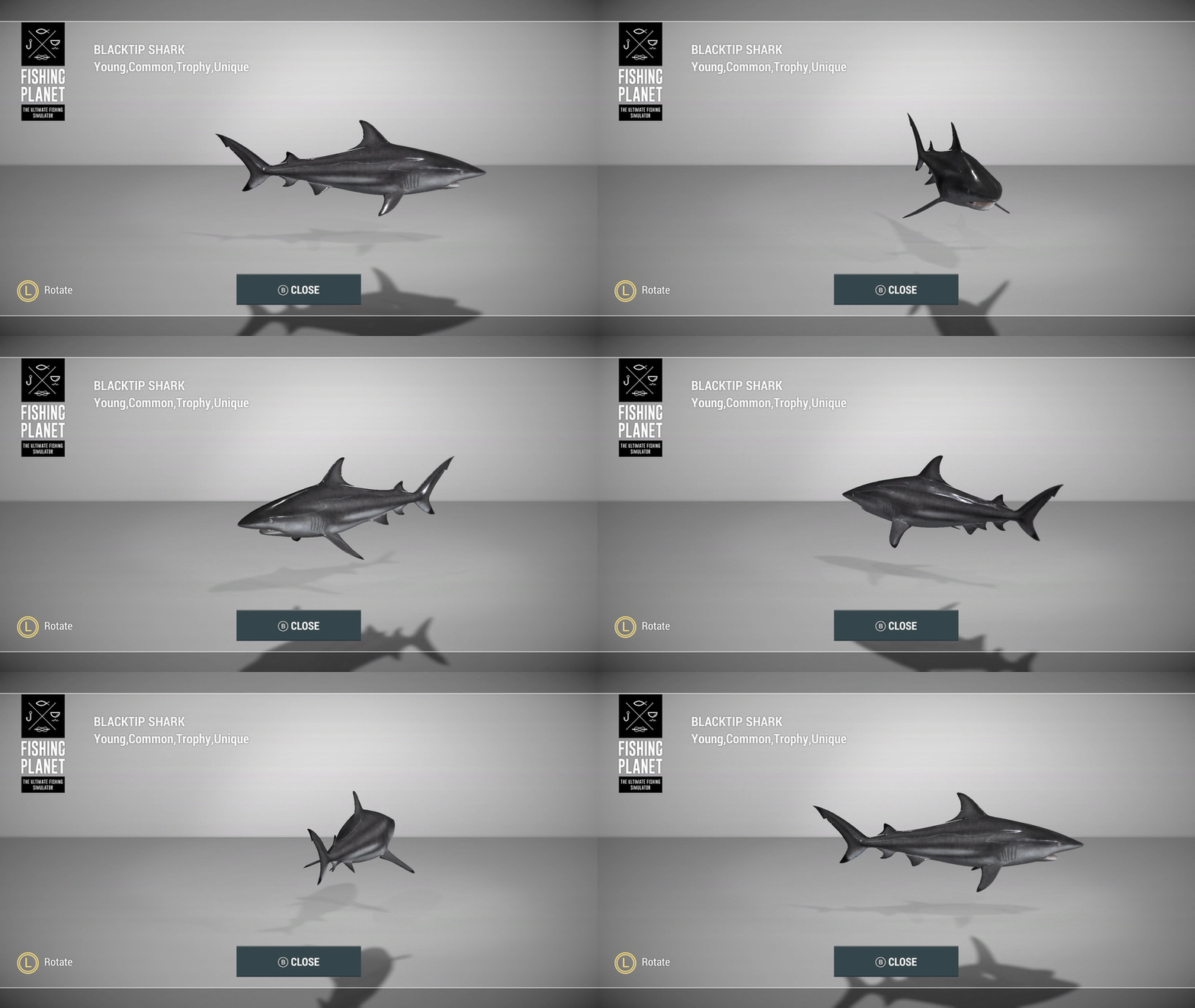
Blacktip Shark
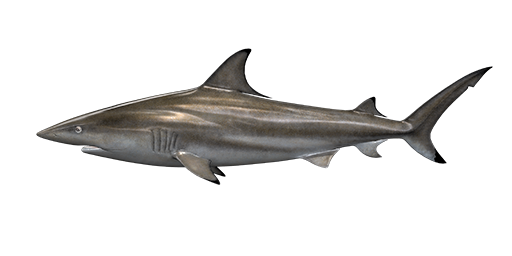
Blacktip Shark is one of the fastest coastal sharks and an impressive hunter, sometimes bursting out of the water while chasing schools of baitfish. It commonly hunts near the surface in coastal waters and estuaries. Anglers typically target this powerful predator with natural baits, though large artificial lures can also produce strikes during daylight hours.
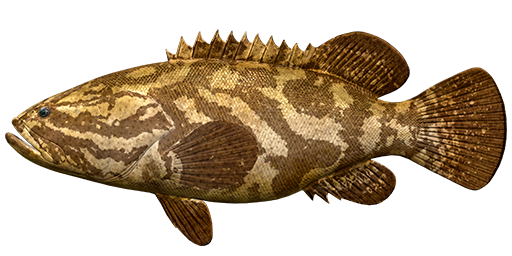
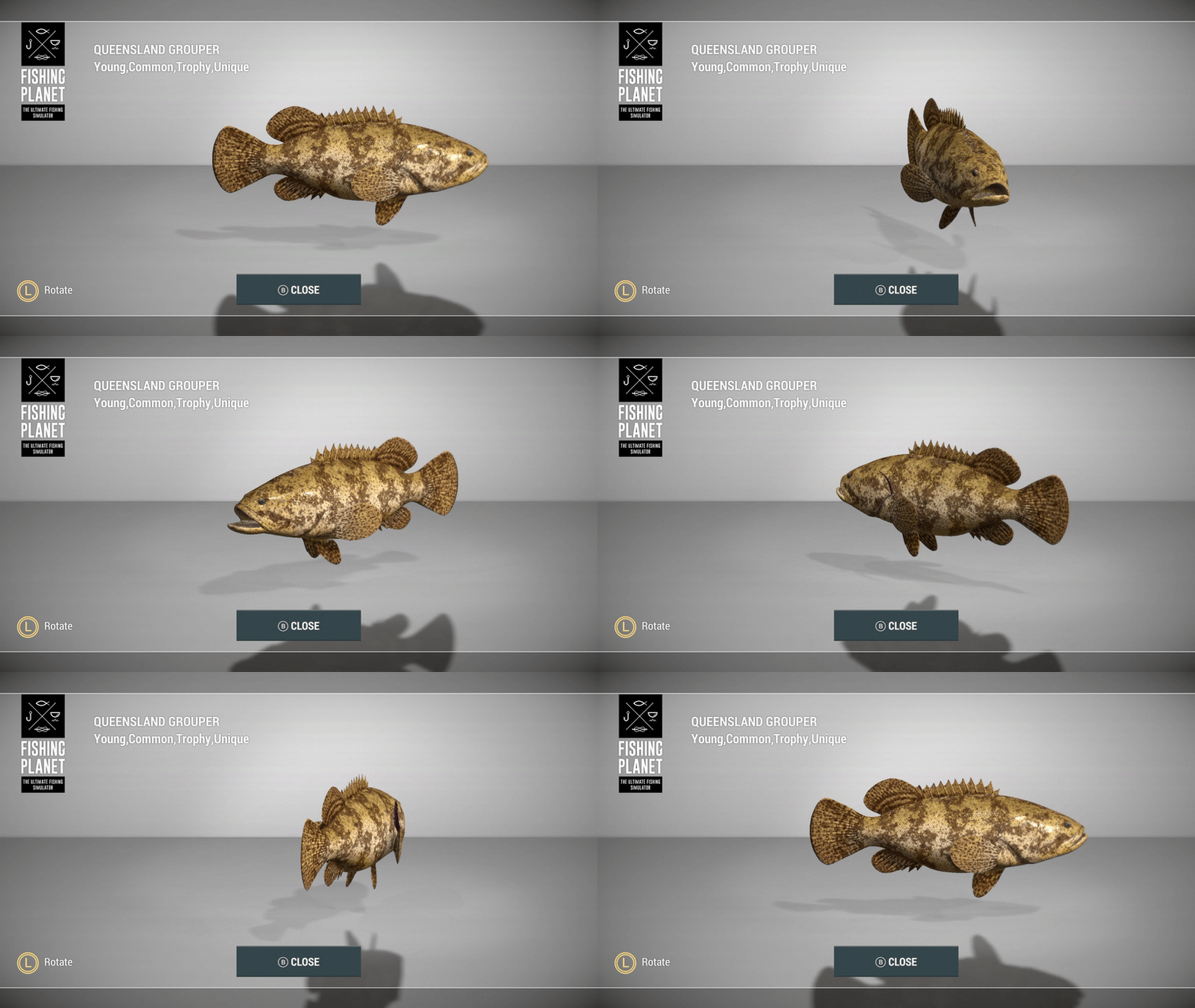
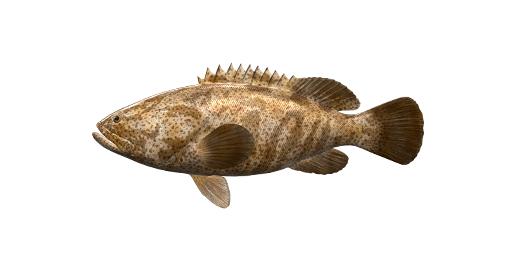
Queensland Grouper
The Queensland Grouper is the largest of all groupers and one of the most formidable predators of coral reefs. Preferring reef edges, rocky structures, and submerged cover, it hunts by ambushing fish, crustaceans, and other prey. This rare trophy species is best targeted with natural baits and vertical jigging during daylight hours.
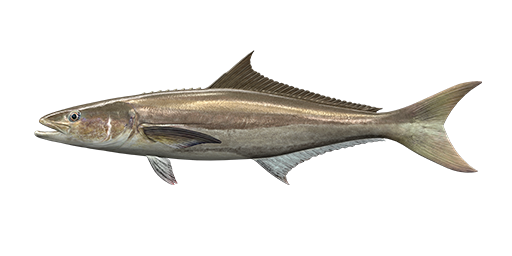
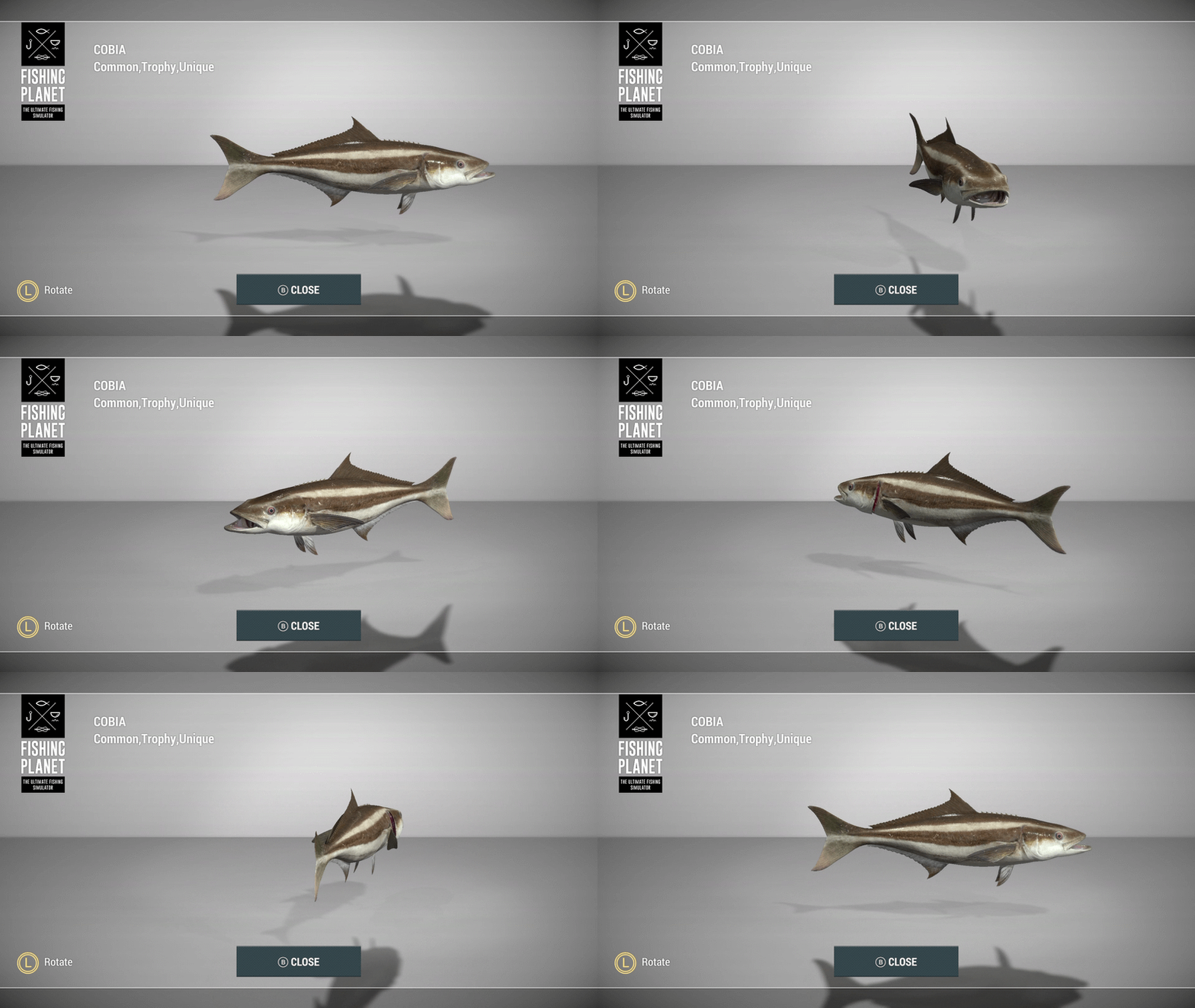
Cobia
Cobia is a fish in a league of its own — literally, as it is the only living species in the family Rachycentridae. Known for its strength and hard-fighting nature, this powerful predator often gathers around buoys, pilings, and other vertical structures and regularly enters estuaries and river mouths. It readily takes natural baits and large artificial lures during daylight hours.
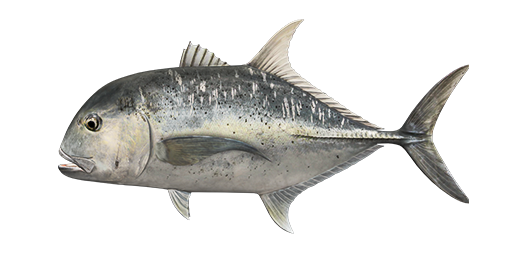
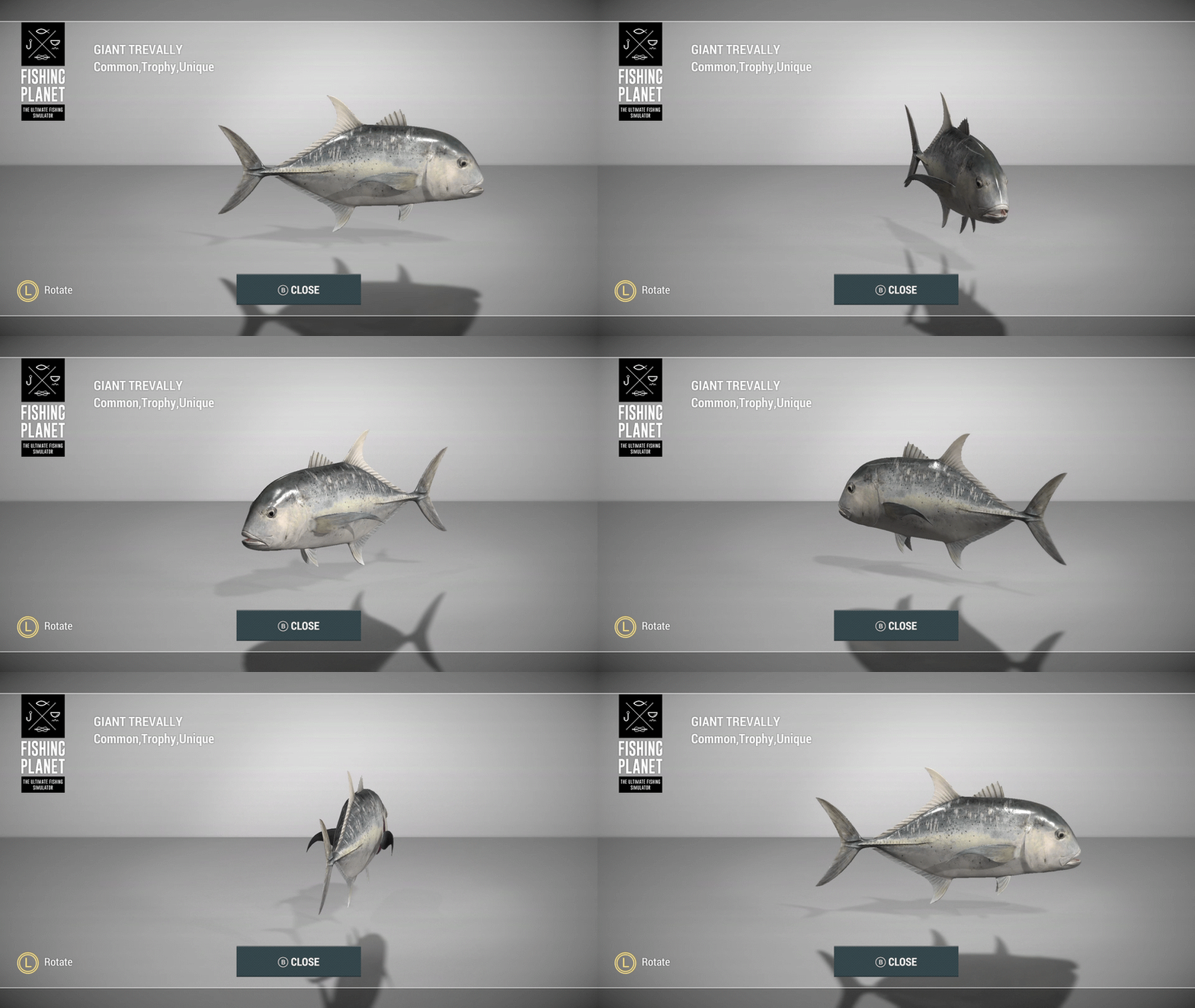
Giant Trevally
Giant Trevally is a large coastal semi-pelagic fish that is common in tropical and subtropical waters of the Indo-Pacific region. It’s the largest representative of its kind. Its young live in shallow bays, lagoons, intertidal zones, and estuaries, while adults live in deep pools, near atolls in the open sea, and on deep-water reefs. This fish is territorial and leads a solitary life, but sometimes forms small groups.
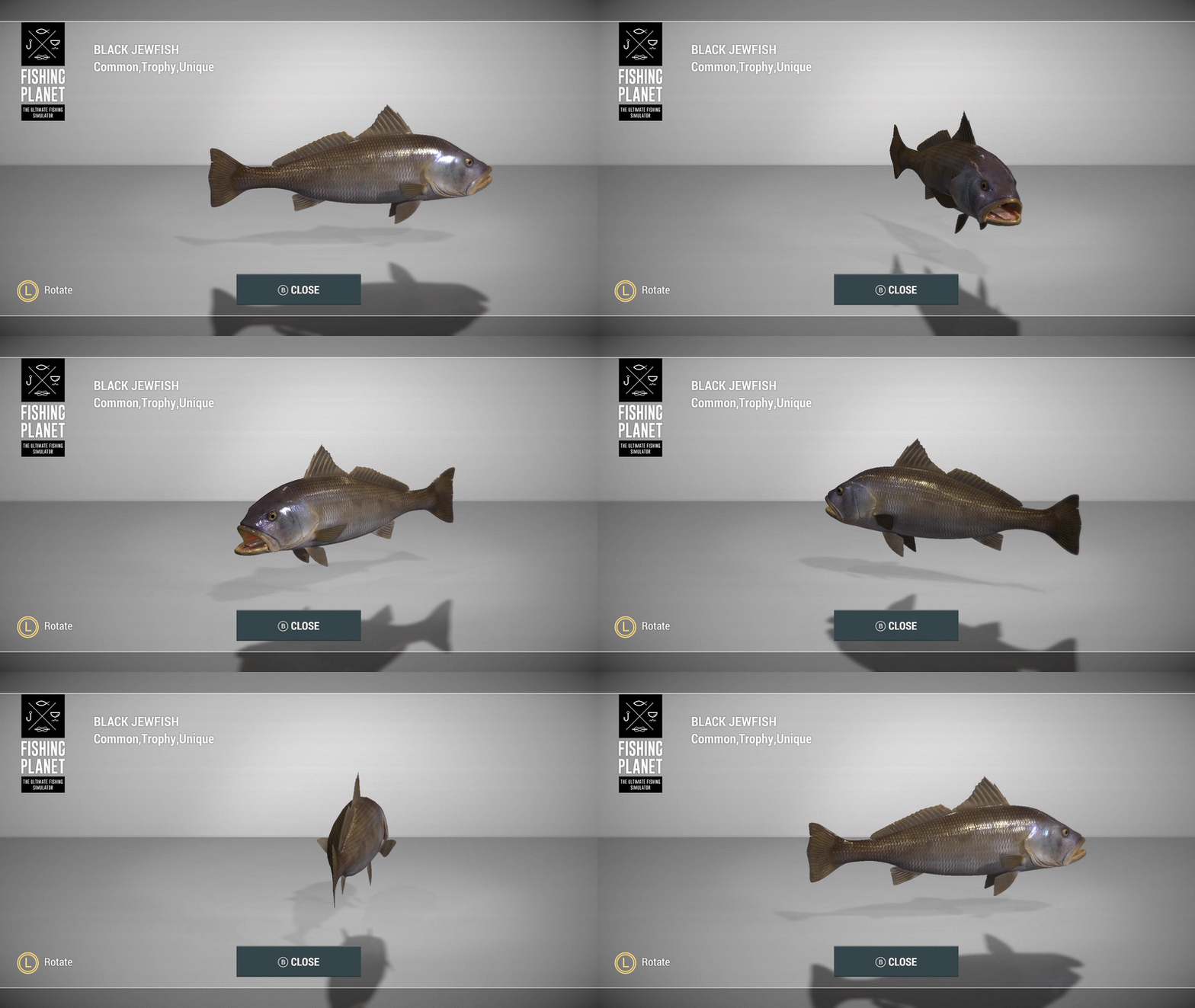
Black Jewfish
Black Jewfish belongs to the drum family, and the name is quite literal — these fish can produce deep grunts and croaks using their swim bladder. This large bottom-dwelling predator favors deep structures and feeds mainly on crustaceans and small fish. It becomes especially active at night and during tidal changes, making these periods the best time to target it.
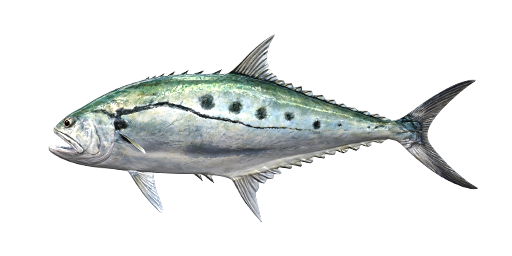
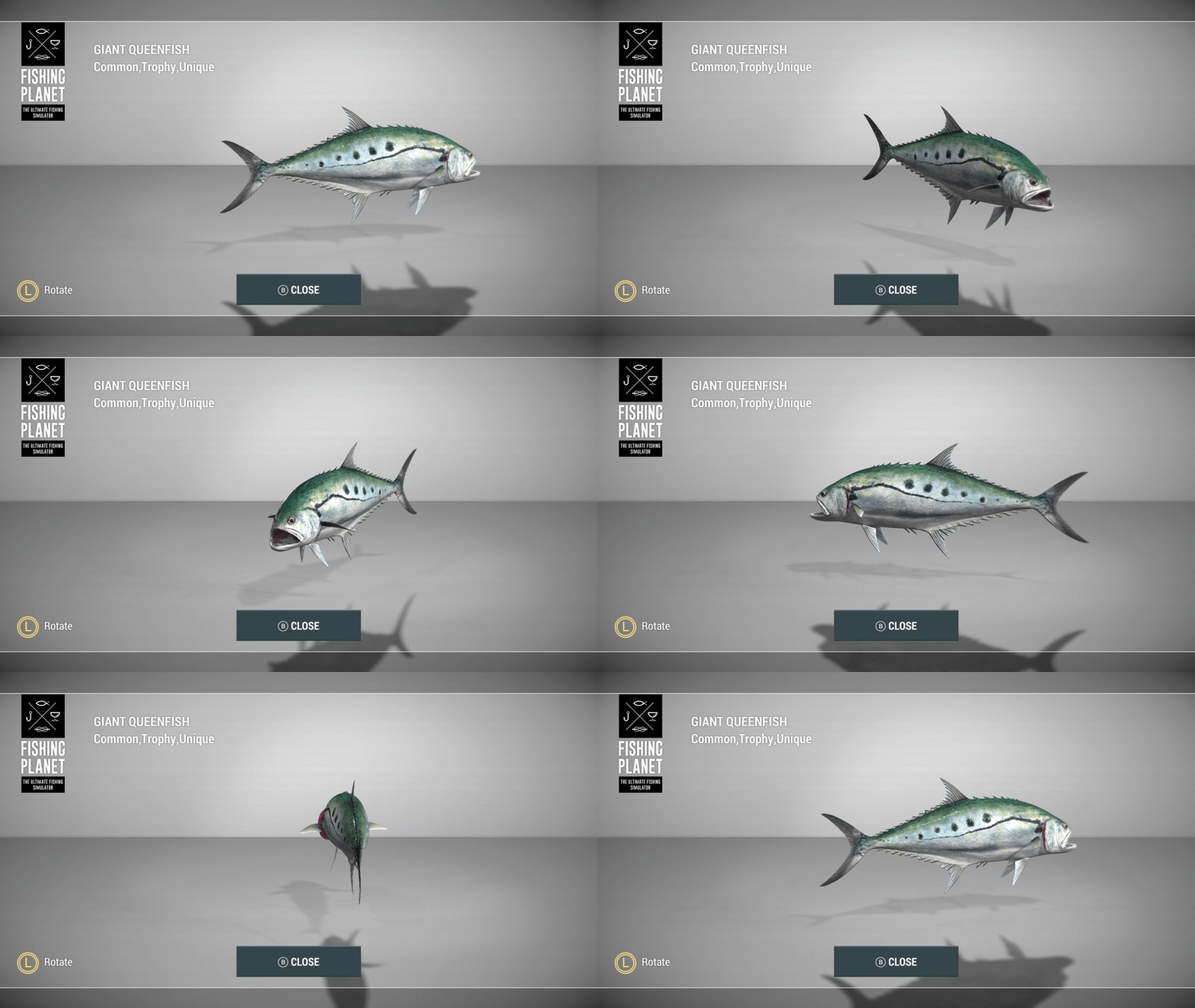
Giant Queenfish
Giant Queenfish is one of the fastest predators found in tropical estuaries. Often hunting in large schools, it targets mullet, sardines, and other baitfish. This hard-fighting species is most commonly caught on spinning tackle, with fast surface retrieves and jigging presentations producing excellent results.
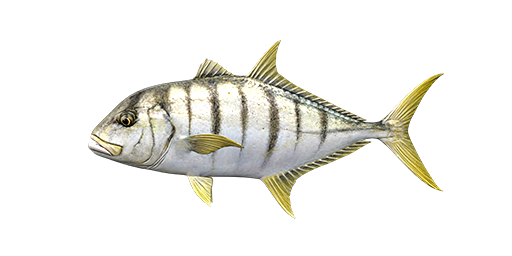
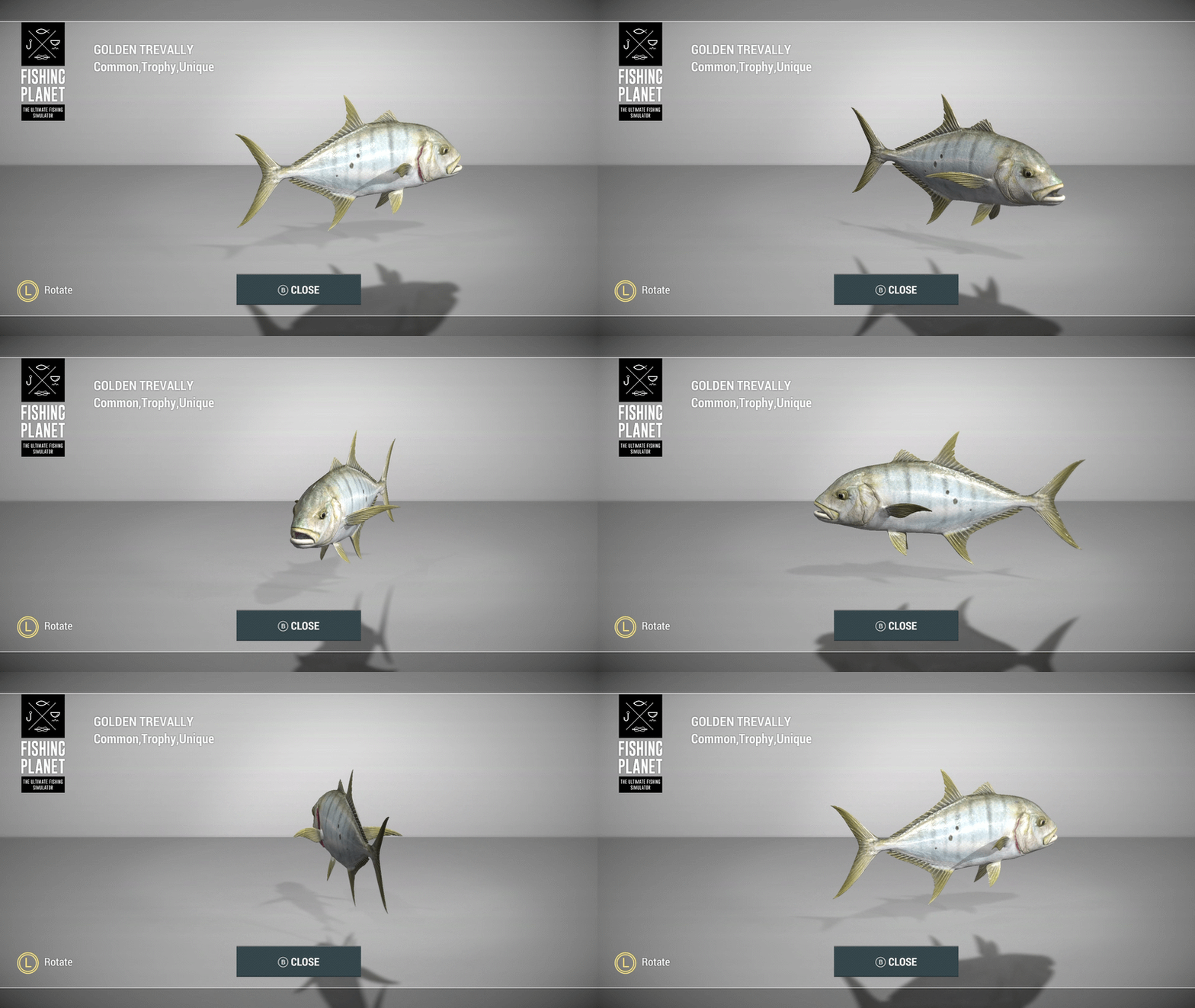
Golden Trevally
Golden Trevally is one of the most striking trevally species found in Australian waters. It spends much of its time feeding near the bottom on crabs, shrimp, and small fish. Known for its long, powerful runs, it readily takes both natural baits and artificial lures. This species is most often targeted during daylight hours, with jigs worked close to the bottom being especially effective.
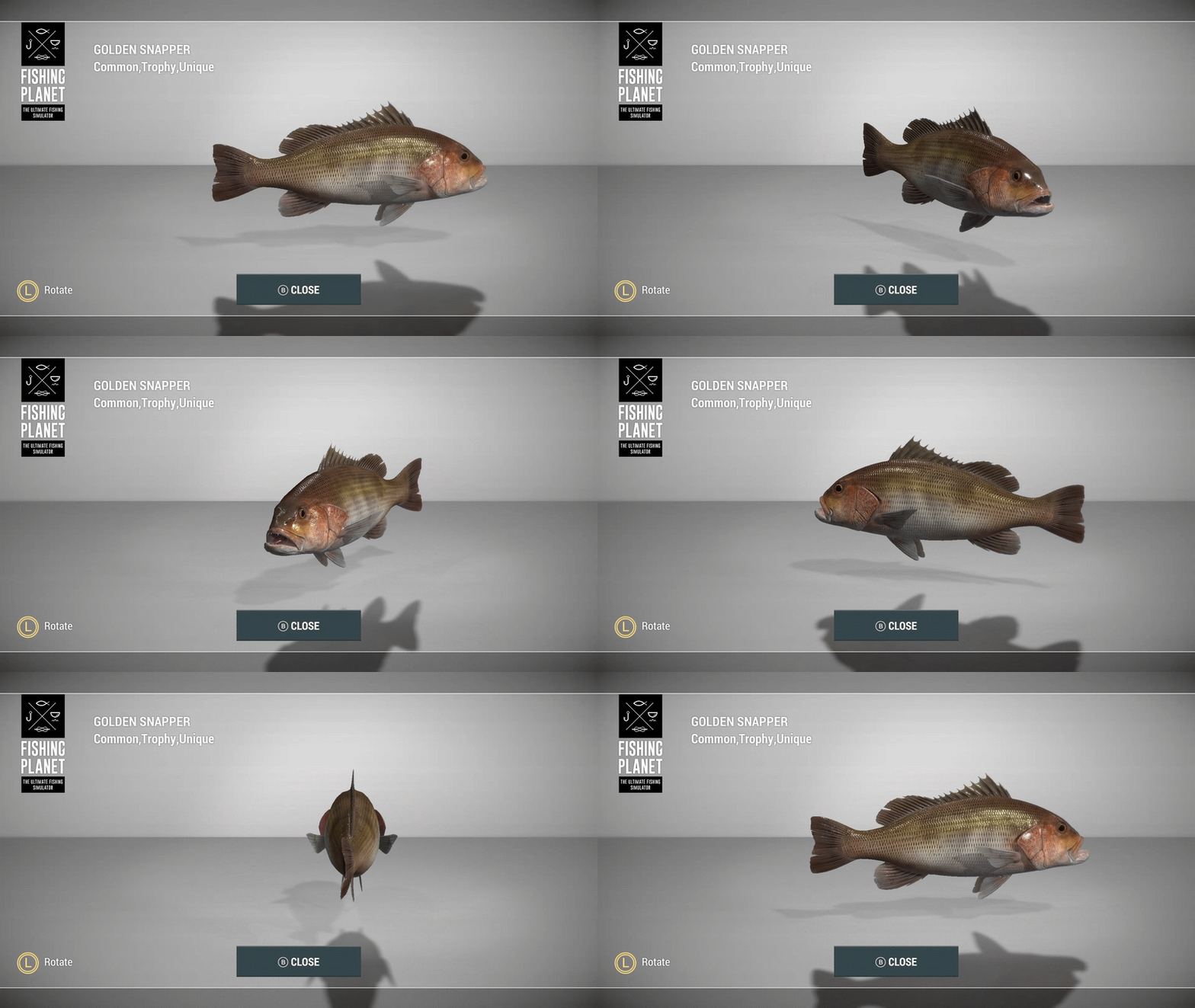
Golden Snapper
Golden Snapper is a predatory species commonly found in estuaries, mangroves, and coastal reef systems. Juveniles prefer sheltered waters, while adults are often associated with deeper structure. Feeding mainly on fish and crustaceans, it is a highly sought-after target for anglers.
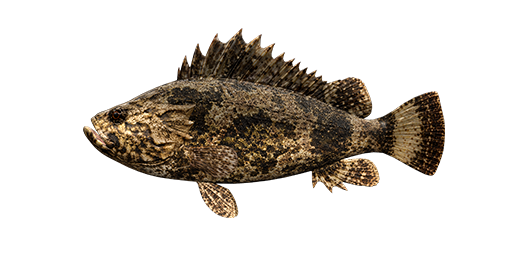
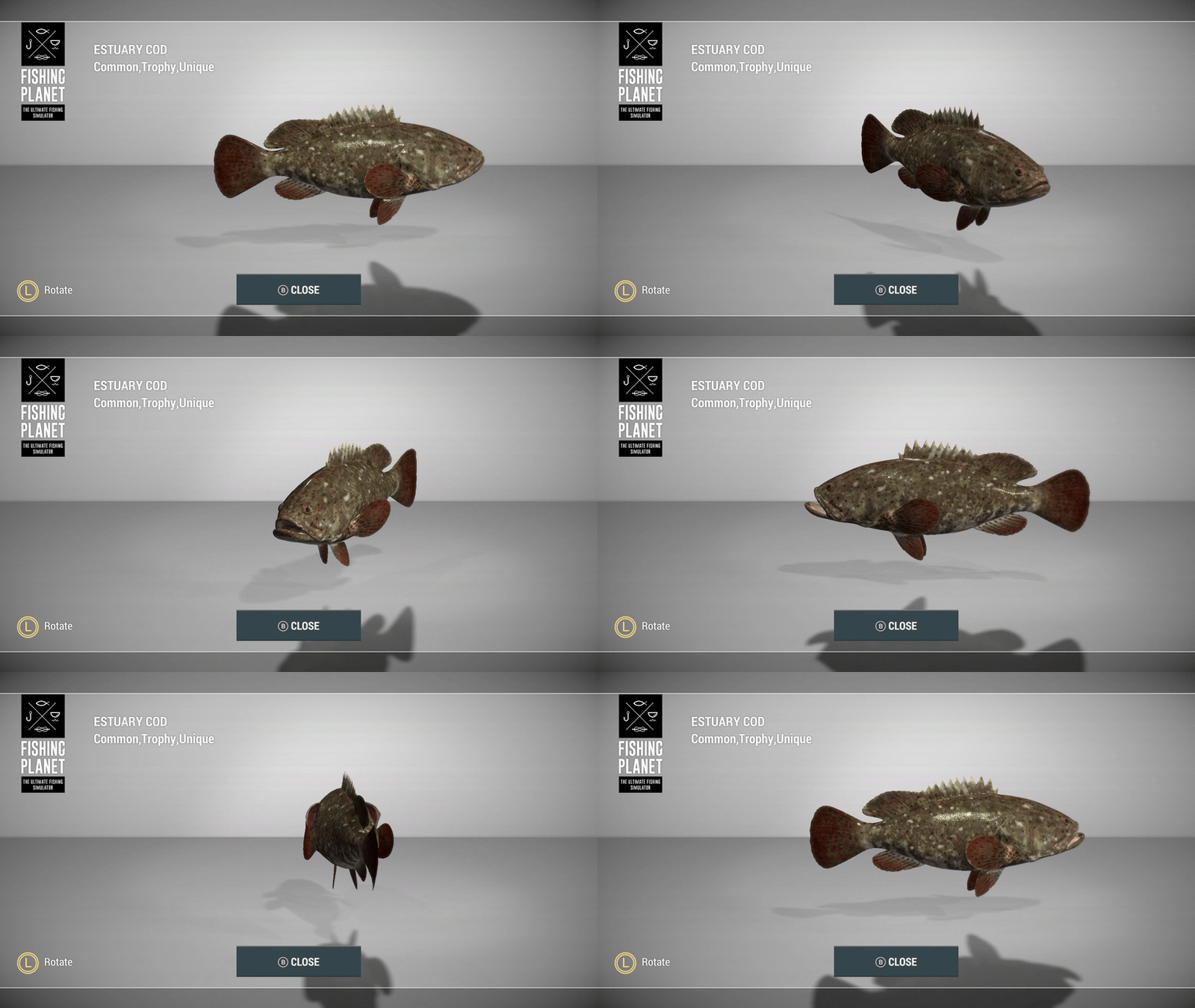
Estuary Cod
Estuary Cod is an ambush predator that spends most of its time close to cover. Feeding on fish, shrimp, crabs, and other crustaceans, it relies on surprise attacks rather than chasing prey. Once hooked, it will quickly try to reach nearby snags or mangrove roots. Juveniles are commonly found in estuaries, while larger fish also inhabit coastal reef areas.
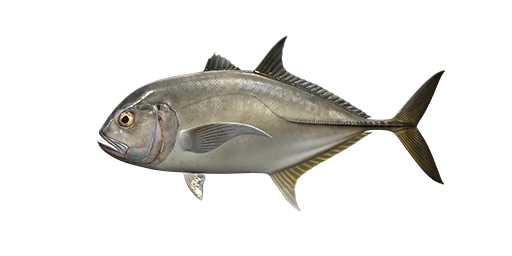
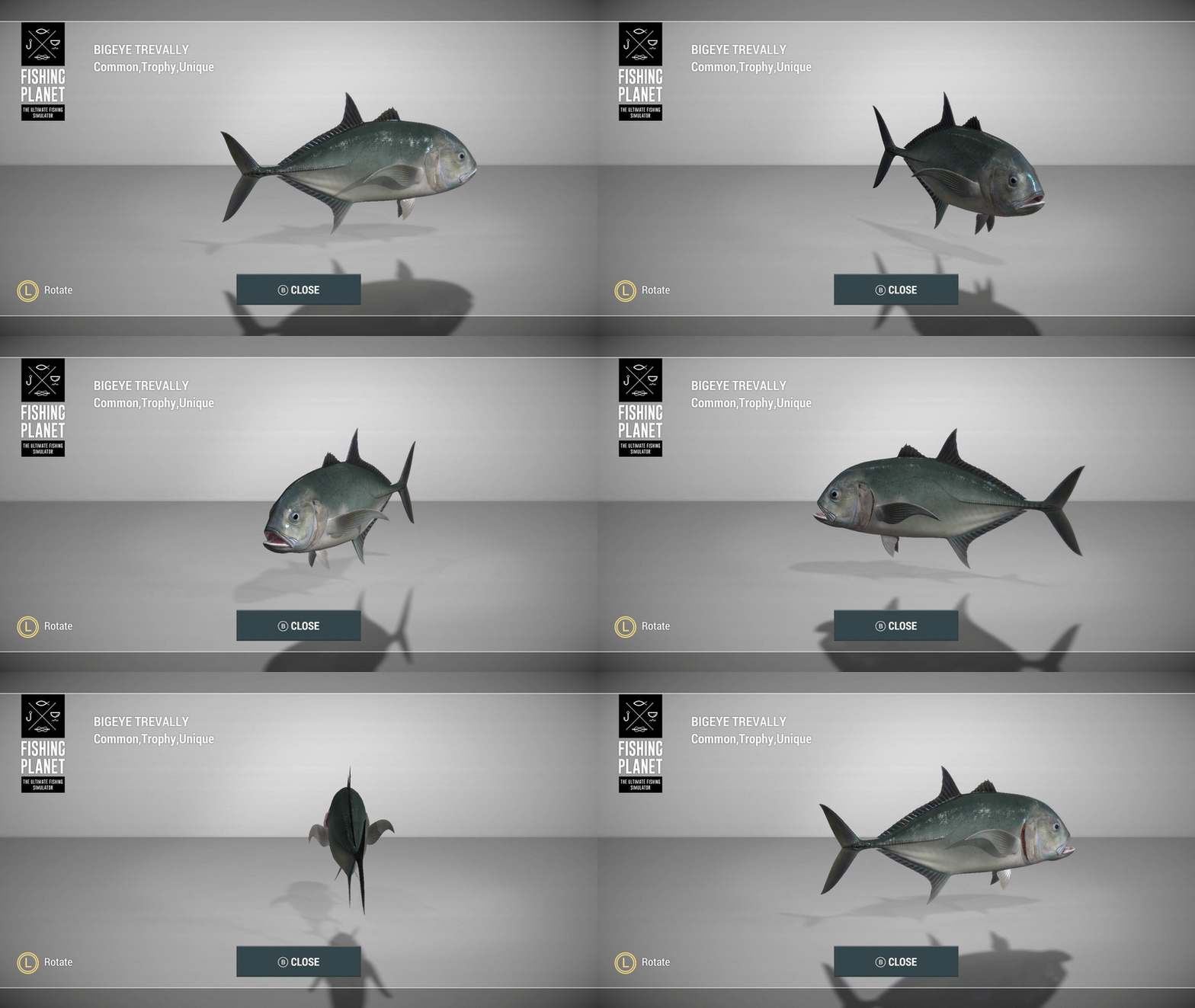
Bigeye Trevally
Bigeye Trevally is one of the most powerful members of the trevally family. Juveniles often form large schools in estuaries and mangrove channels, while adults prefer deeper waters around reefs and estuary entrances. Its diet includes fish, crustaceans, cephalopods, and other invertebrates. This species is most active during the day, at dawn and dusk, and around tidal changes.
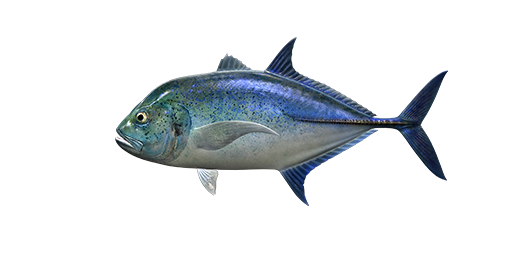
Bluefin Trevally
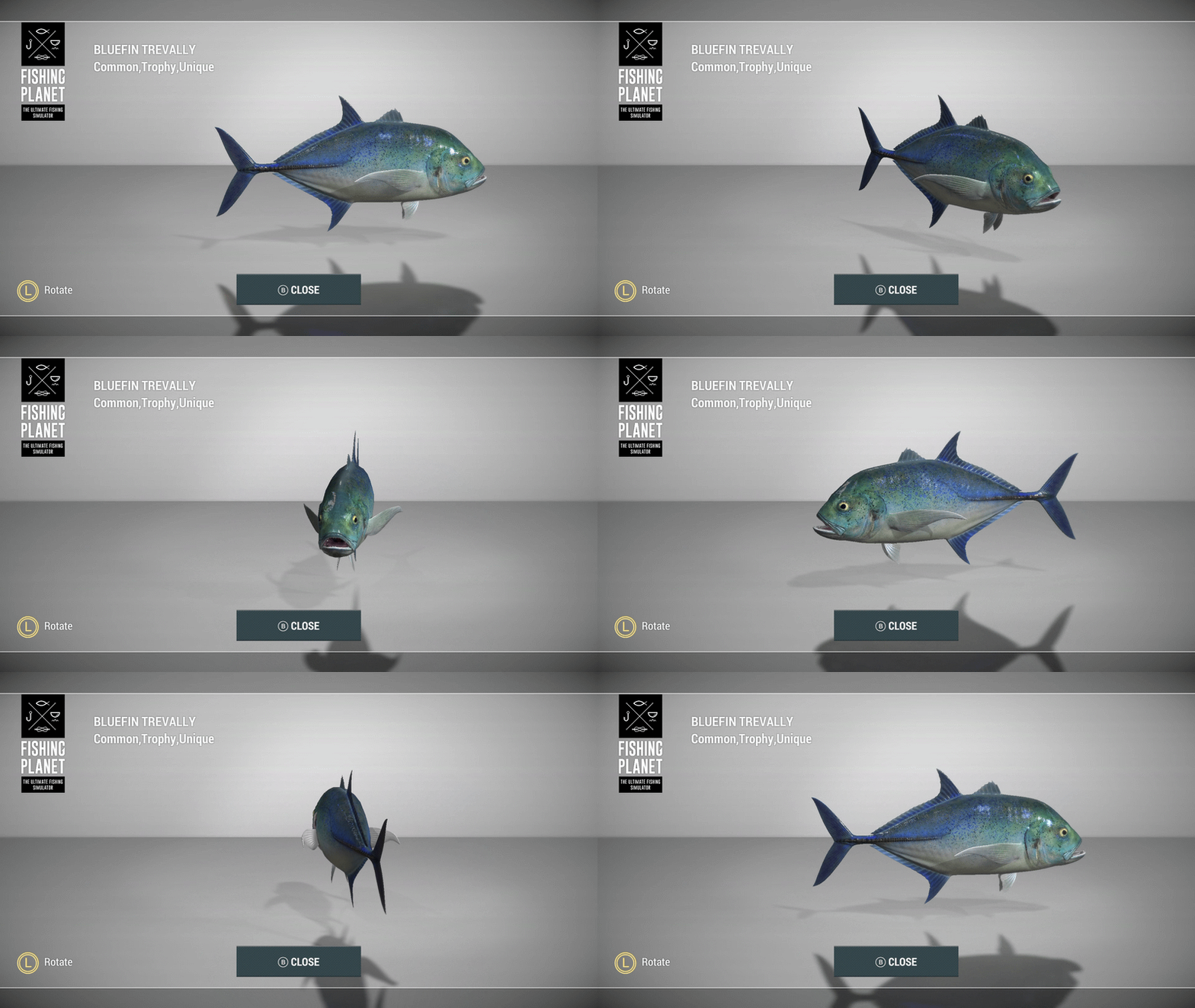
Bluefin Trevally is a striking coastal predator often found in shallow waters, while juveniles regularly enter large estuaries. Feeding mainly on fish and crustaceans, it is known for its lightning-fast attacks and powerful first runs. This species is most commonly targeted during daylight hours.
Tripletail
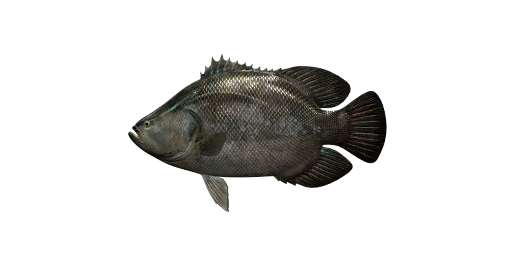
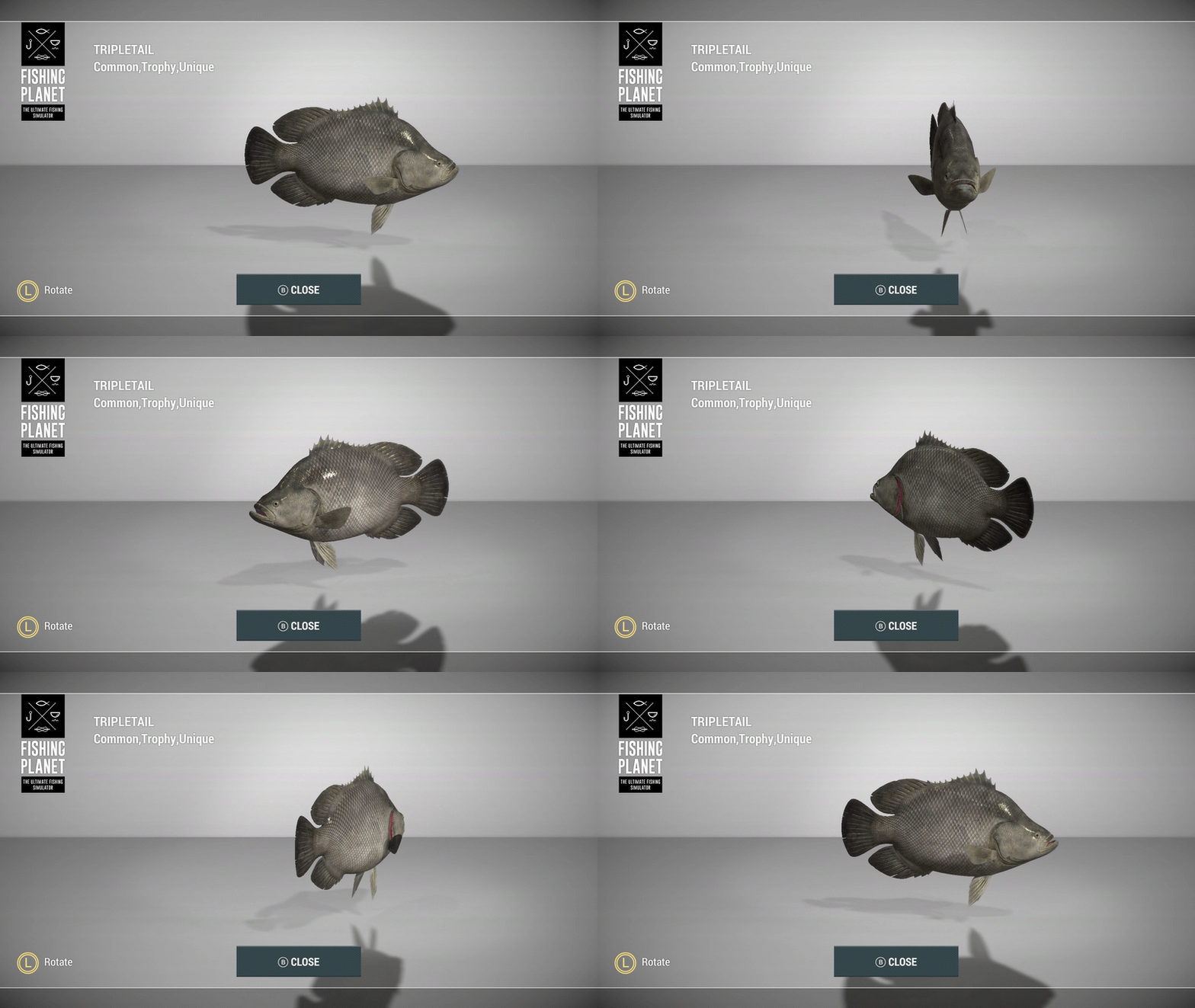
Tripletail is known for its unusual habit of drifting near the surface alongside floating objects. It is commonly found around pilings, buoys, and floating debris, where it feeds on small fish and shrimp. Most often targeted during daylight hours, this species is considered a prized catch in tropical Australian estuaries.
Milkfish
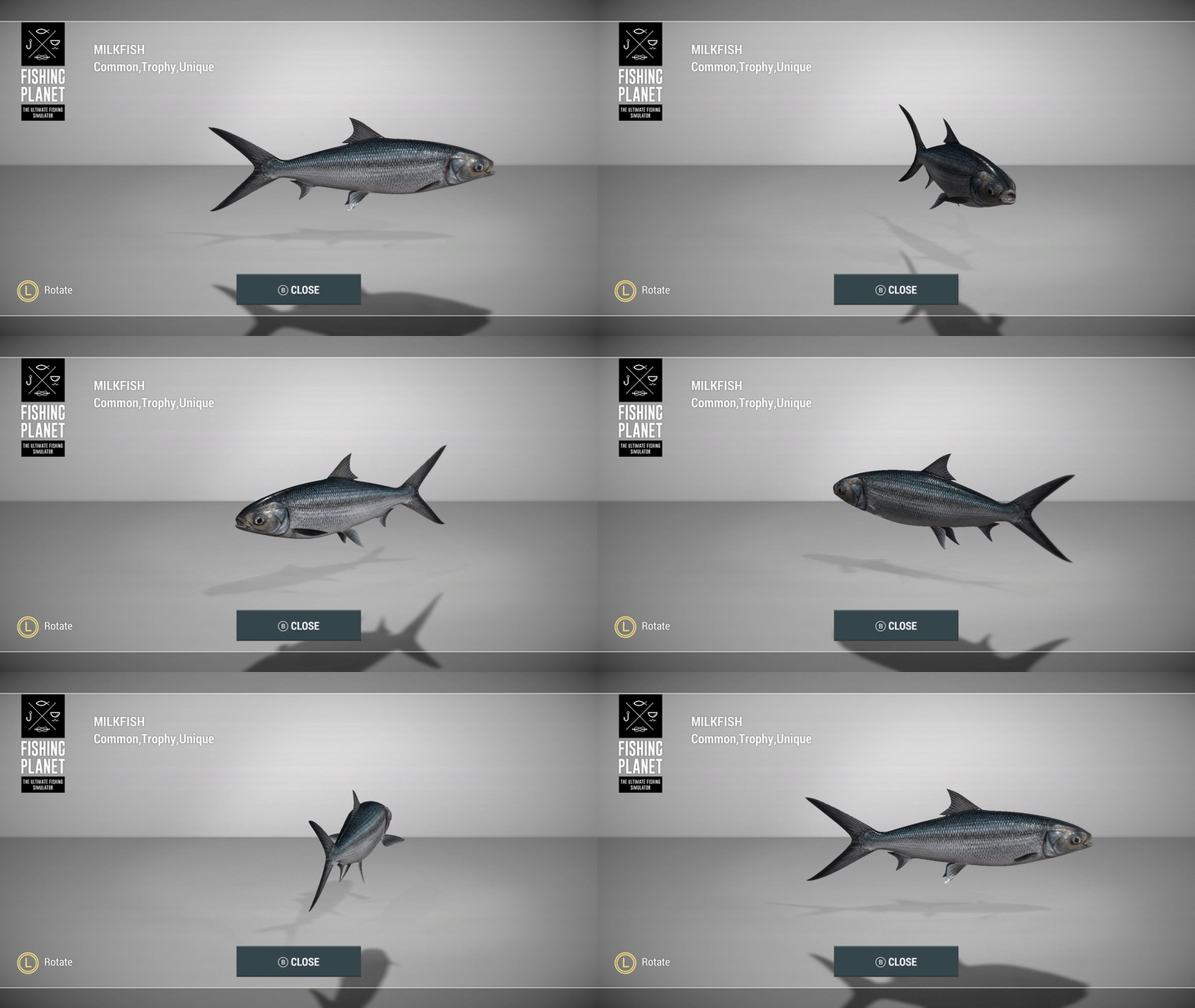
Milkfish is one of the strongest fighting non-predatory saltwater fish. Its diet consists mainly of algae, detritus, and small invertebrates. Due to its cautious nature, anglers often use light tackle and long leaders when targeting this species. Milkfish regularly enters large tropical estuaries and is most active during daylight hours.
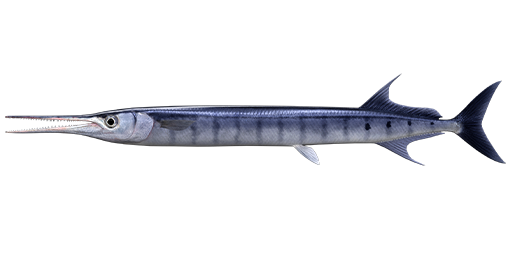
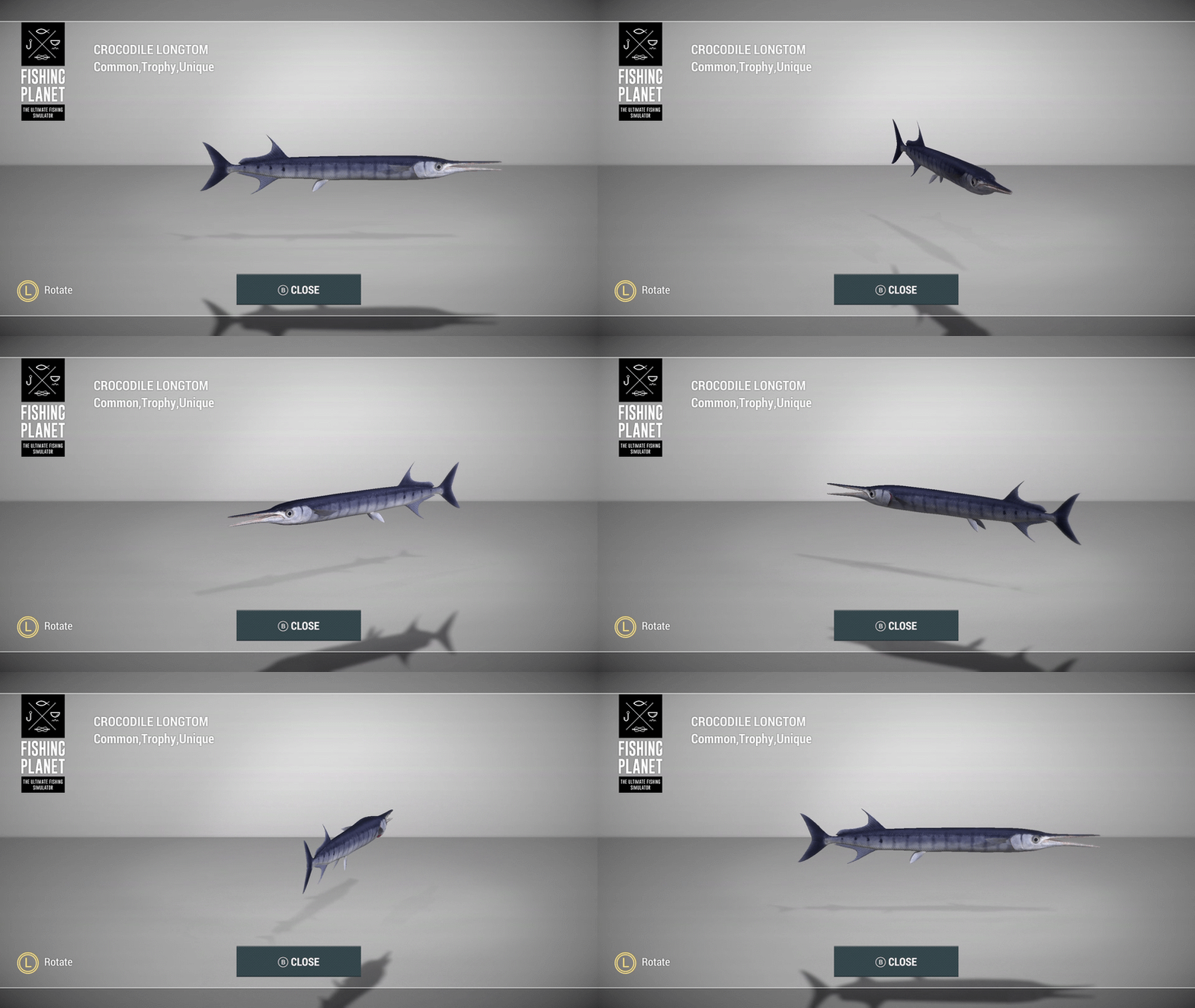
Crocodile Longtom
Crocodile Longtom bears a striking resemblance to a crocodile thanks to its long, narrow jaws. This Australian endemic is one of the country’s fastest surface predators, chasing small fish near the surface and often leaping out of the water in pursuit. This species is usually found alone or in small schools.
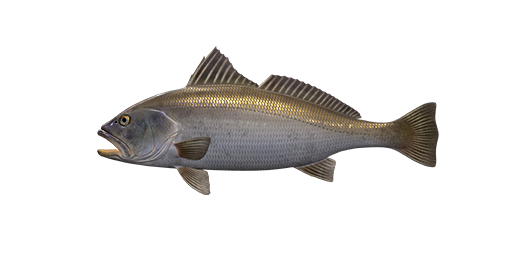
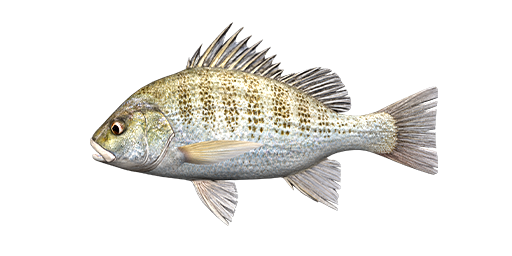
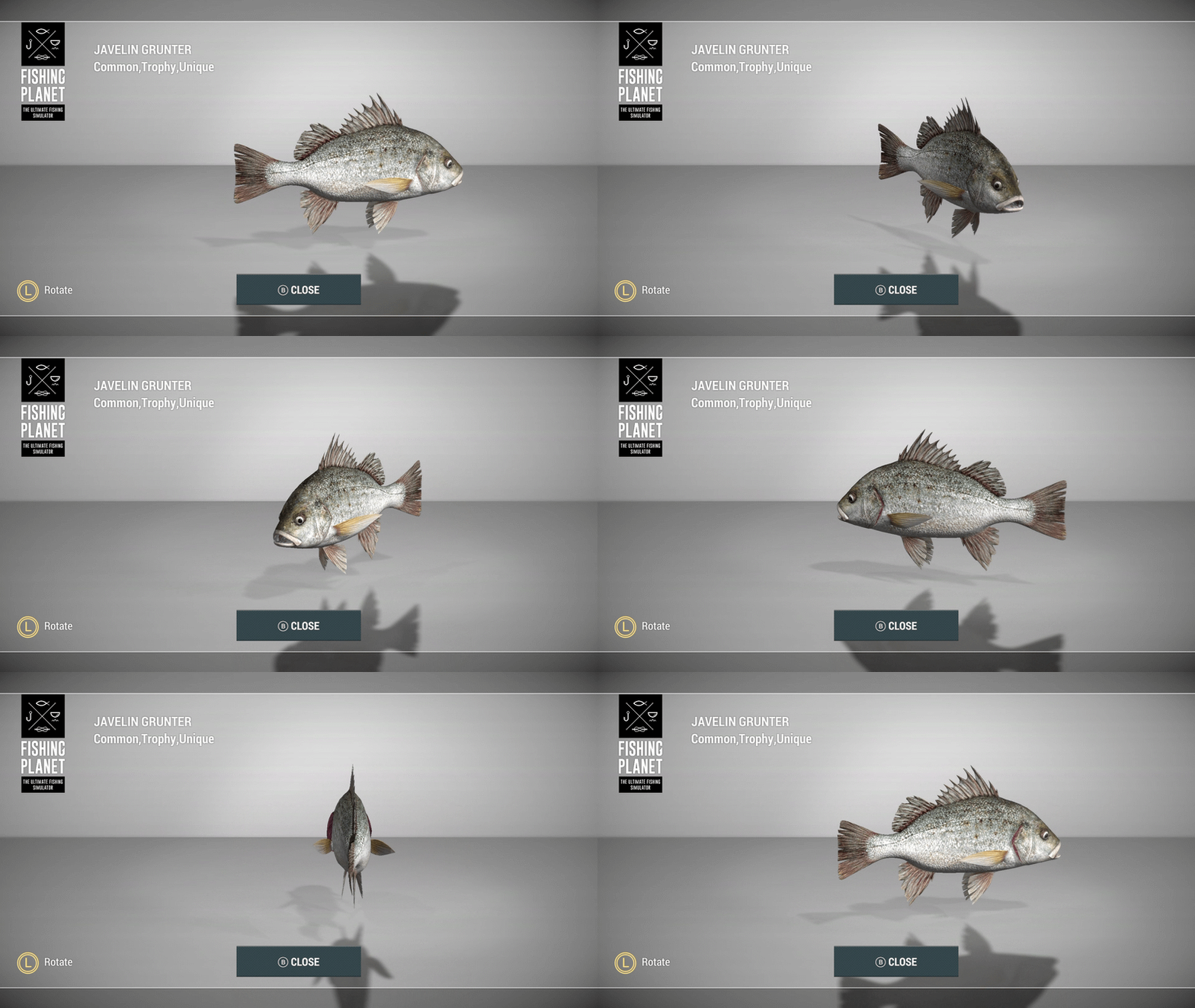
Javelin Grunter
Javelin Grunter is one of the most recognizable members of the grunter family in tropical Australia. It feeds mainly near the bottom, using its well-developed senses to locate prey. Its diet consists of shrimp, crabs, mollusks, and small fish. Once hooked, Javelin Grunter puts up a steady and surprisingly strong fight, making it a rewarding catch both day and night.
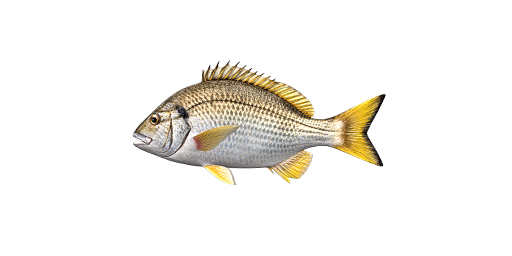
Yellowfin Bream
Yellowfin Bream is one of Australia’s most popular estuarine fish species. Often found around rocky shorelines and oyster reefs, it feeds on mollusks, crustaceans, and small fish. This species spends much of its time searching for food around the structure and is primarily active during daylight hours.
New Features and Improvents
That wraps up our look at the fish of Cassowary Coast, but we still have a few things to tease in this DevDiary.
With each update, we look for ways to bring you features you’ve asked for and make everyday fishing smoother. Cassowary Coast Update is no exception.
Place your markers on any fish from your Keepnet
You asked for it and we made it! If you forgot to place the marker right after the catch, you will still be able to go back to any fish in your Keepnet and mark where you caught it, even after starting a new game session. We are sure your fishing life will become more enjoyable with this one!
Observe the Fishing Planet World with The New Camera
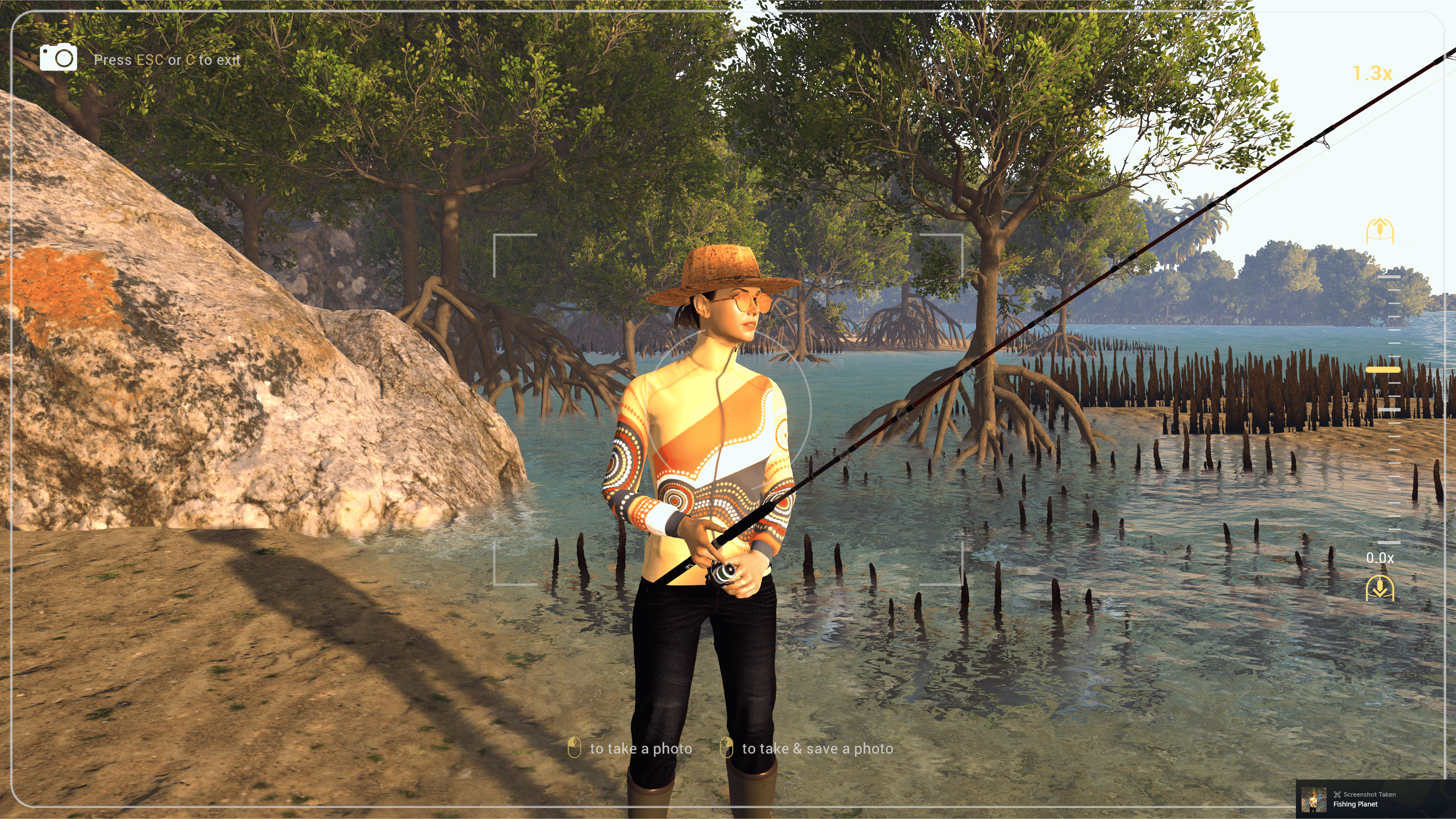
Many of you know that we always leave some hints for our Community in the pictures of our DevDiaries, and some of you spotted a hint in our last DevDiary too. With this update, we’re introducing the Camera! You will be able to adjust your framing and zoom in or out not only in the Photo Mode after you caught fish, but also any time during your fishing trip. The controls are easy to use, and your photos can be saved directly to your device in an optimized quality.
Catch the last light over the water, snap a photo of your fishing buddy with their catch, or take a moment to notice the little details our artists have tucked into the world of Fishing Planet. You’ll use the Camera for special missions, and you can also use it to just enjoy yourself and take those moments home with you.
This DevDiary may be coming to an end, but our Australian journey is far from over. You might have noticed a few things not adding up, and might have wondered, what about the coral reefs? Does the journey end at the estuary, or should it take us out into the open ocean?
For now, we’ll leave you to imagine what might be waiting for our lovely Community beyond the river mouth. In the meantime, we still have more to share about Cassowary Coast. Hang in there, Brave Angler, and stay tuned for our next DevDiary to be ready to Gear Up for Down Under!
Follow us on social media to stay tuned and be in touch with our lovely community:
Cassowary Coast, Queensland, Australia Hey Anglers, For many of us, Australia brings to mind a world waiting to be discovered. Somewhere truly special, a place we dream of visiting but haven’t yet had the chance to explore. We wanted to give this corner of the world the…
Hey Anglers, The spooky season continues, and we’ve got something you’ve been waiting for! Once Upon a Halloween and Curse of the Frankenfish Events are finally back! If you missed out on these fan-favorite Halloween adventures before, now’s your chance to jump in, take on their challenges, and…
Halloween Twitch Drops Campaign Hey Anglers! Keep the Halloween fun going with our Carnival of Terrors Twitch Drops campaign! From October 19, 2026 (10:00 UTC) to November 2, 2026 (10:00 UTC), tune in to your favorite Fishing Planet streamers on Twitch and grab some TERRIFIC rewards just for…
We use cookies to make our Website work, improve performance, analyze traffic, and measure marketing campaigns. You can accept all cookies, reject non-essential cookies, or customize your preferences.
Cookie Preferences
You can choose which types of cookies we may use. Strictly necessary cookies are always active because they are required for the Website to function properly.
You can change your preferences at any time through the Cookie Preferences link on our Website.
These cookies are required for the Website to function properly. They support core features such as security, consent management, support forms, and basic Website operation.
These cookies do not require consent and cannot be disabled through this panel.
Name
Description
Duration
Cookie Preferences
This cookie is used to store the user's cookie consent preferences.
30 days
Cookie Preferences
This cookie is used to store the user's cookie consent preferences.
30 days
Analytics cookies help us understand how visitors use the Website. They allow us to measure traffic, identify popular pages, improve performance, and fix issues.
We may use services such as Google Analytics for this purpose.
Google Tag Manager simplifies the management of marketing tags on your website without code changes.
Name
Description
Duration
cookiePreferences
Registers cookie preferences of a user
2 years
td
Registers statistical data on users' behaviour on the website. Used for internal analytics by the website operator.